
Last updated September 19, 2026
Full 25-point door and opener safety check with every visit - springs, cables, rollers, tracks, and your LiftMaster or Chamberlain opener included
You get a price before we start. It does not change when the truck arrives.
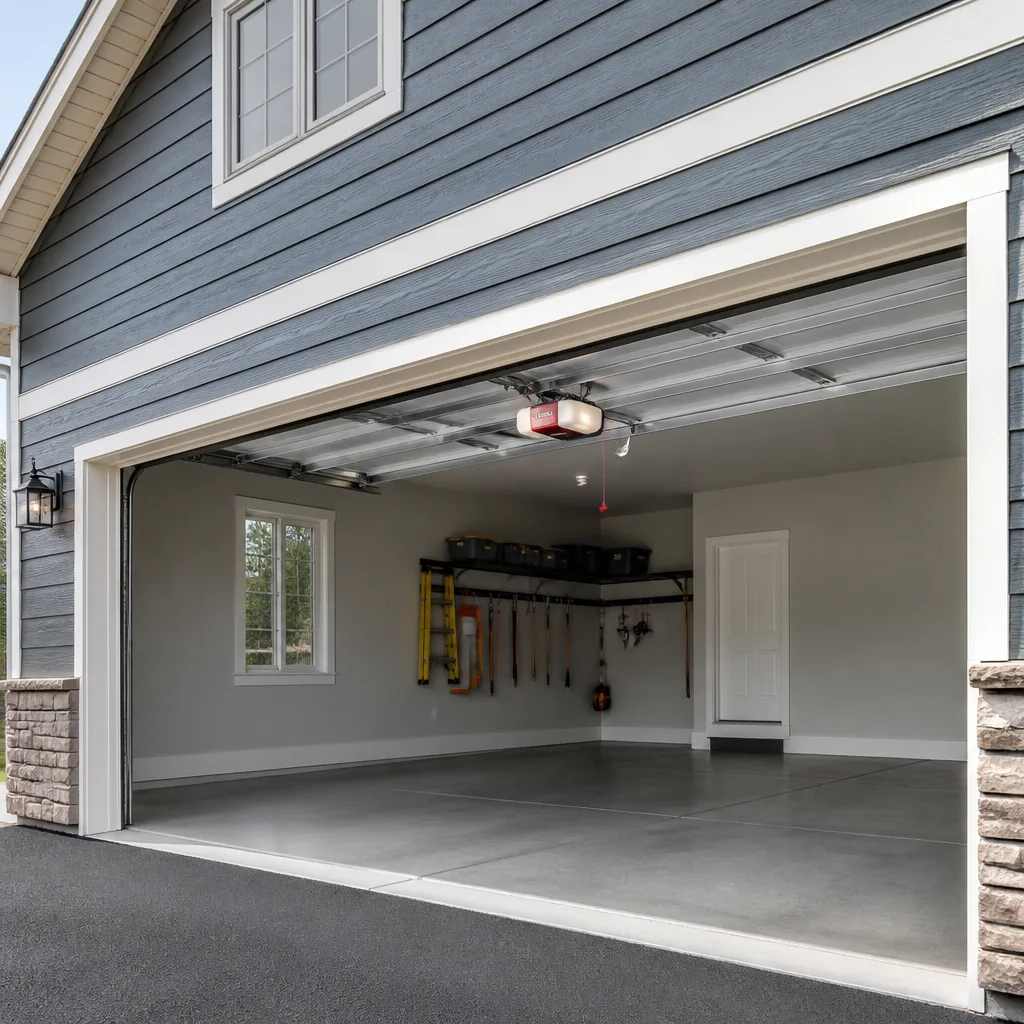
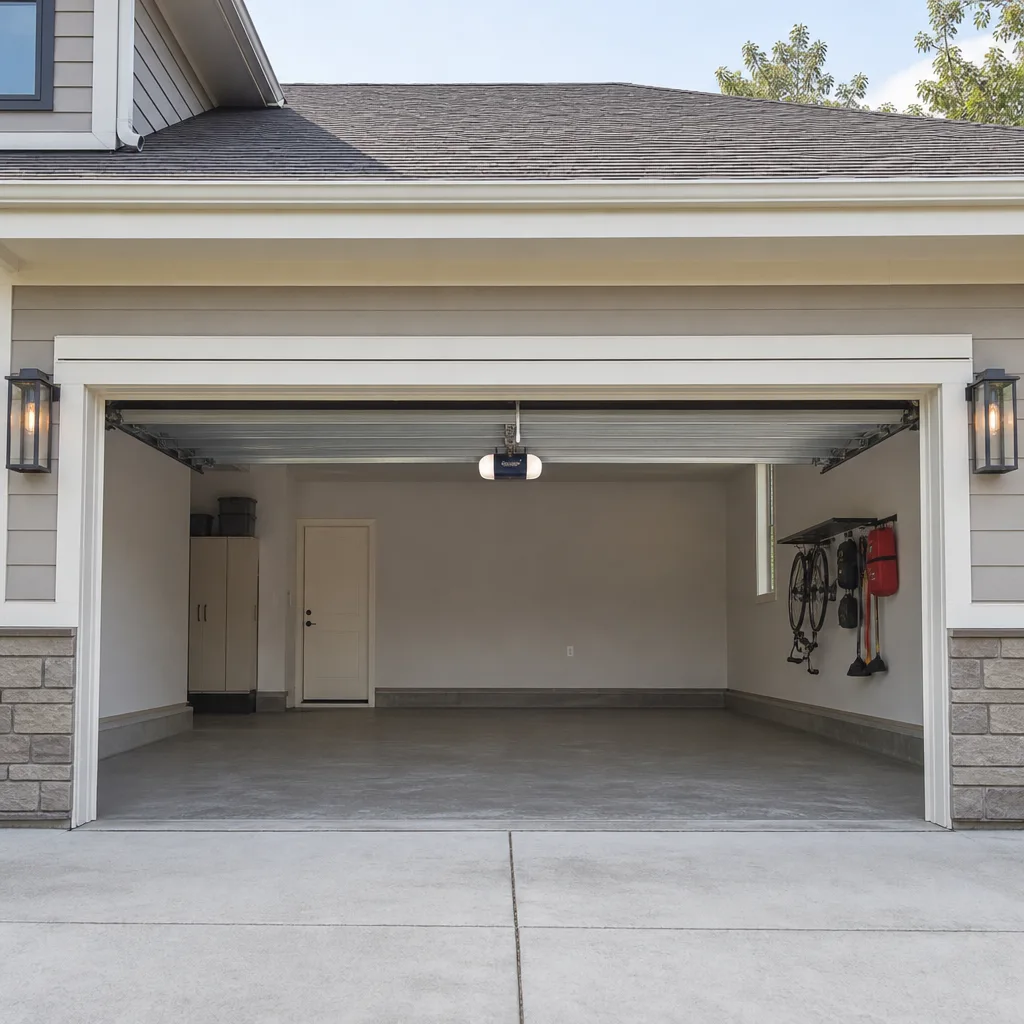
 Before
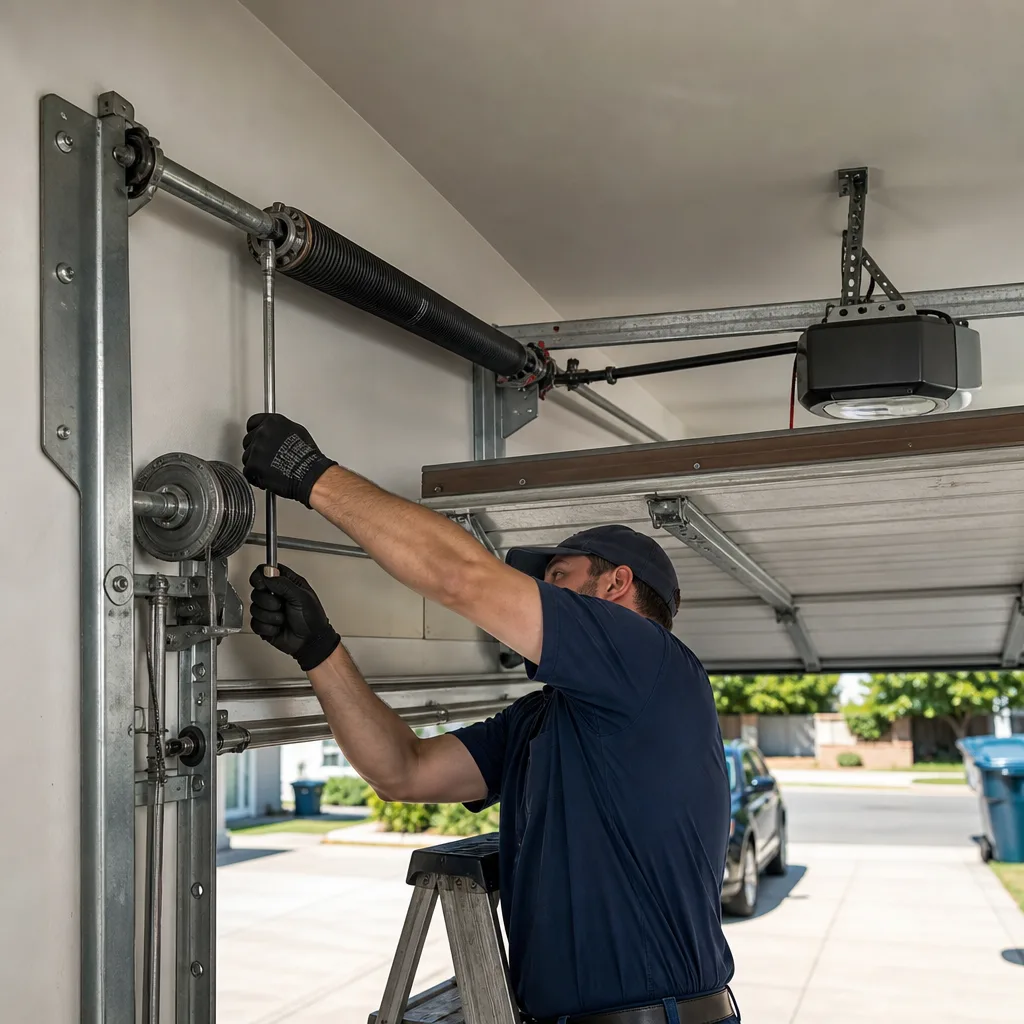 After
After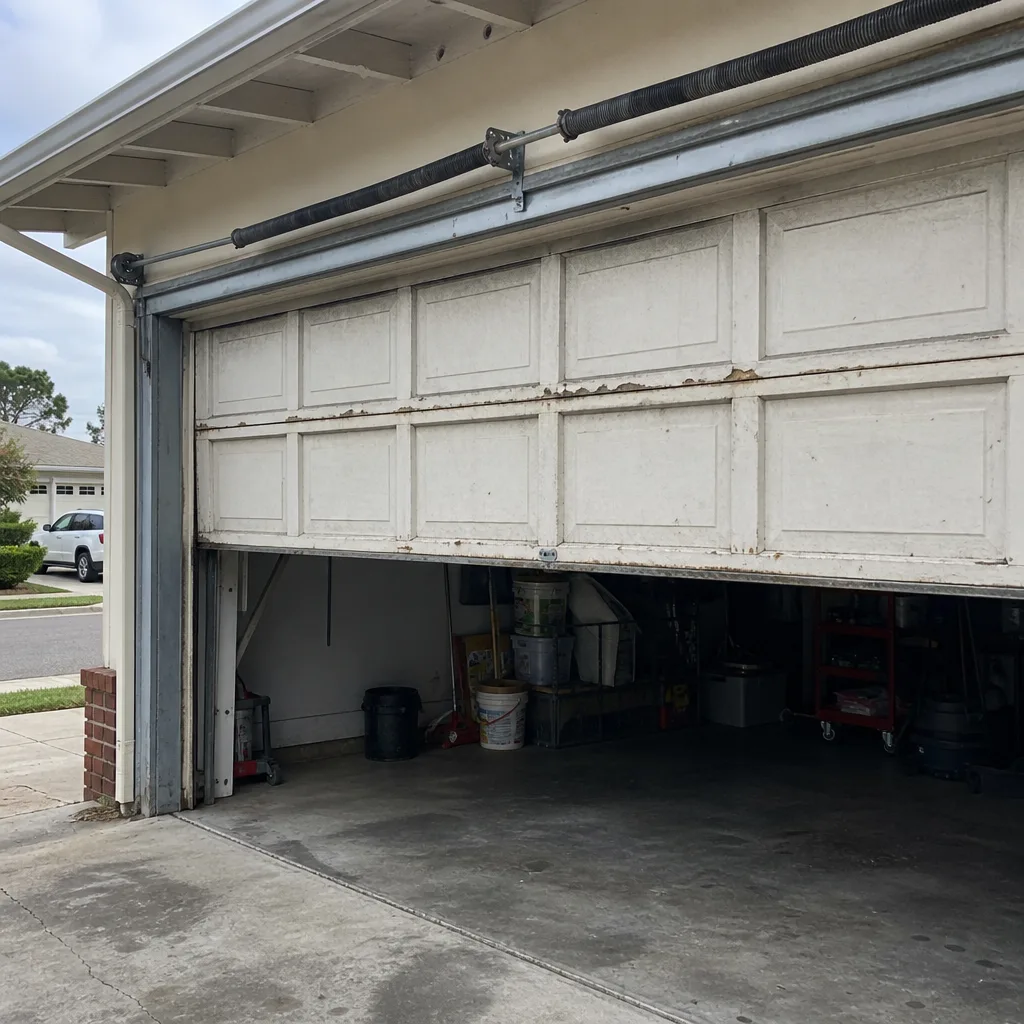 Before
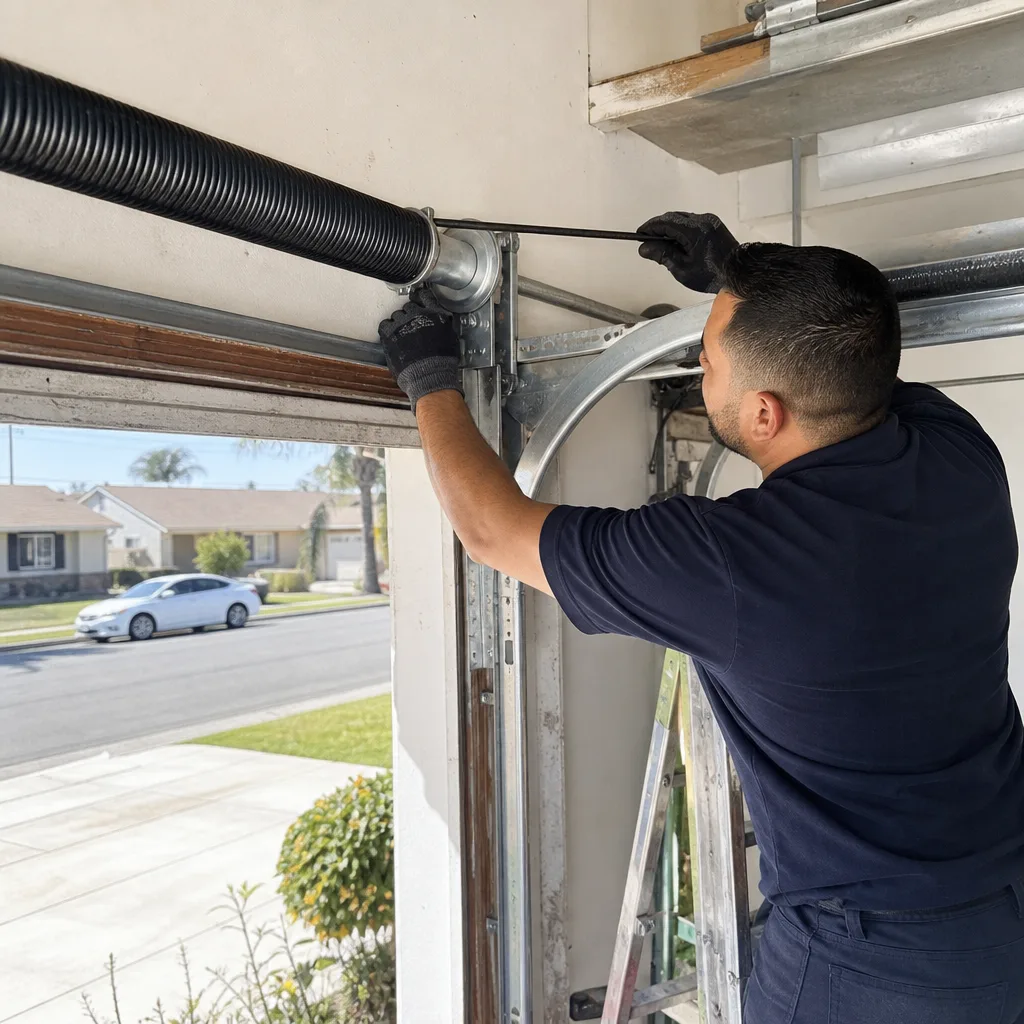 After
After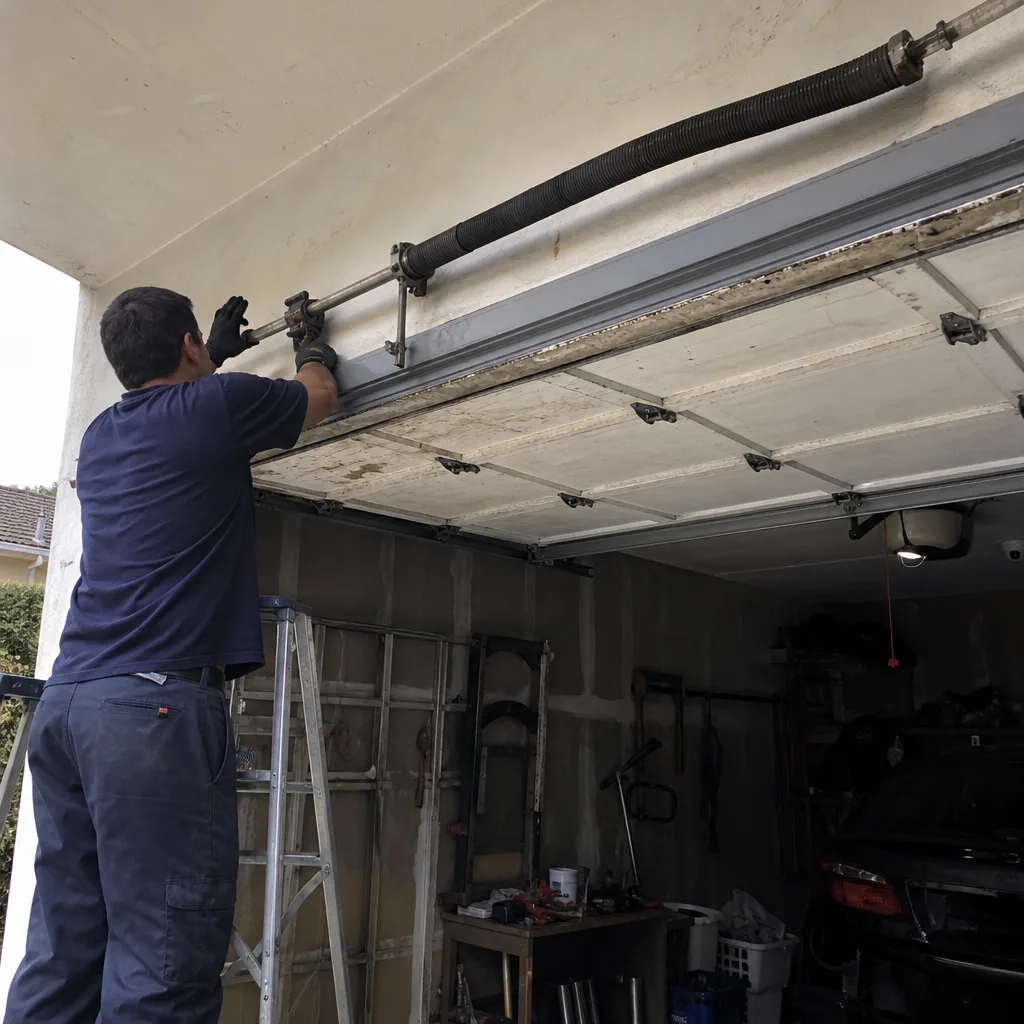 Before
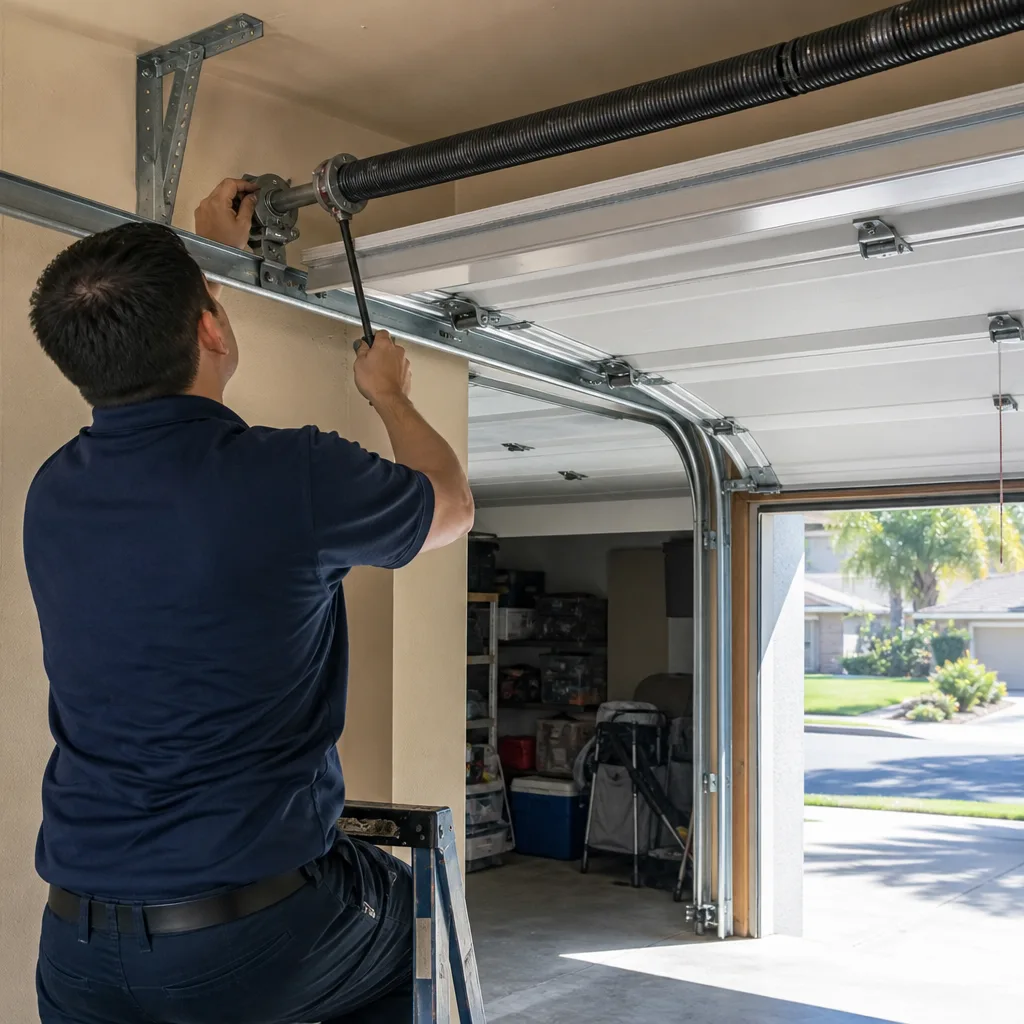 After
AfterThe Complete Guide to Garage Door in Huntington Beach
Galvanized steel rated for coastal environments on the box still shows surface rust within 18 months in Huntington Beach’s marine layer if the coating weight is under G90, a spec most product listings don’t print and most installers don’t quote. This guide exists because a garage door on Seapoint Street fails differently than one in Fountain Valley, and the difference is measurable in coating thickness, spring cycle life, and opener drive wear. You’ll learn how to read the specs that matter in the 92648 zip code, what the permit office actually enforces, and which decisions cost you money twice when guessed wrong.
Quick Answer
A garage door in Huntington Beach needs a G90 galvanized coating or better on steel, a torsion spring system sized for door weight, and a belt-drive opener with corrosion-resistant hardware if you want more than five years out of it. Your total cost for a complete replacement runs between $1,400 and $3,600 installed, the variance driven by material, insulation, spring cycle rating, and whether permits apply, as detailed in our Garage Door Cost Breakdown: The Huntington Beach Homeowner’s Reference for 2026. The single highest-leverage decision is the galvanized coating weight, because the marine layer starts working on G60 steel the day the door is hung.
Table of Contents
- The Salt Air Problem: Why Huntington Beach Kills Standard Doors
- G90 vs G60 Galvanized Coating: The Spec That Matters Most
- Spring Systems: Torsion vs Extension for Huntington Beach Doors
- Panel Materials: How Steel, Aluminum, Wood, and Vinyl Age in 92648
- Opener Drive Types: What the Salt Air Does to Belt, Chain, and Screw
- Huntington Beach Permit Triggers: When a Repair Becomes a Full-Permit Job
- Maintenance Schedules That Work at a Quarter Mile From the Coast
BeforeAfterThe Salt Air Problem: Why Huntington Beach Kills Standard Doors
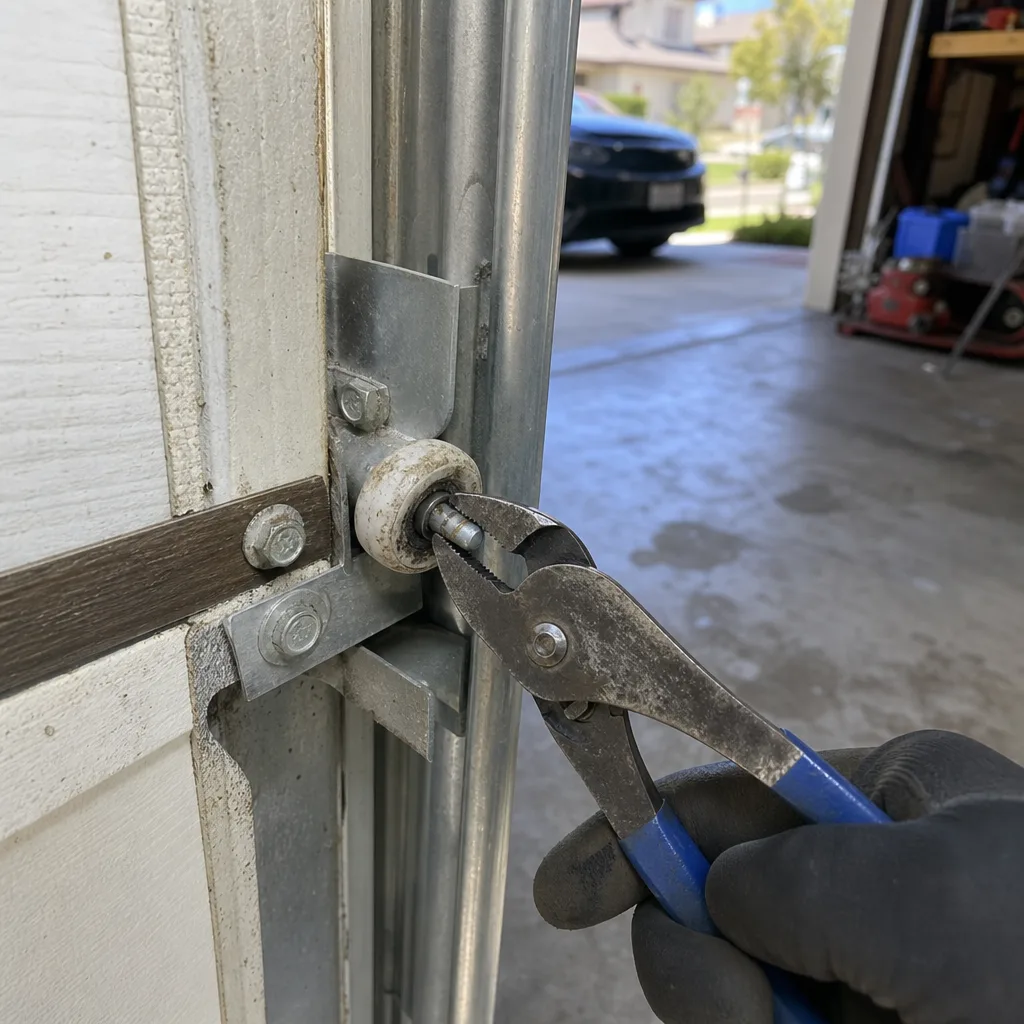
Huntington Beach sits inside a narrow coastal band where airborne chloride concentrations run higher than almost anywhere else in Orange County. The marine layer doesn’t just bring fog. It carries salt particles that settle on garage door hardware and sit there, held in place by condensation that forms every time the temperature swings between morning overcast and afternoon sun. That microclimate is what turns a standard G60 galvanized steel door into a rusted liability within two to three years.
We see it consistently on doors installed between 2015 and 2020: rust blooms at the bottom rail first, then at the hinge points, then on the track mounts. The steel frame usually survives. The panel skins don’t. Owners who bought standard-grade doors report the first visible rust at the 18-month mark. The owners who bought G90 or better report no corrosion at the five-year mark, on the same street.
The mechanism is simple. Salt deposits attract moisture from the marine layer. Moisture activates the salt. The salt accelerates oxidation. Paint alone doesn’t stop it because paint is a physical barrier, not a sacrificial one. The galvanized coating under the paint is what does the actual protection work, and coating thickness is measured in coating weight. A door that says “coastal rated” on the marketing sheet but doesn’t list the coating weight is a door you should treat with skepticism.
Three environmental factors operate in Huntington Beach more aggressively than most national buying guides assume:
- Chloride concentration: Properties within half a mile of Pacific Coast Highway get roughly three times the atmospheric salt exposure of properties three miles inland in Westminster or Fountain Valley.
- Marine-layer humidity: Morning condensation forms on metal surfaces nearly 300 days a year in the 92648 zip code. That keeps salt particles wet and reactive long after the fog burns off.
- UV load: Huntington Beach averages 281 sunny days annually. Between the coastal moisture and the sun, finishes are attacked from both directions.
This is why the rest of this guide is organized around specs, not brands. A brand is not a predictor of how a door will hold up here. A coating weight, a spring cycle count, and an opener drive type are.
For more on how repairs play out in this environment, see our Garage Door Repair in Huntington Beach page.
G90 vs G60 Galvanized Coating: The Spec That Matters Most
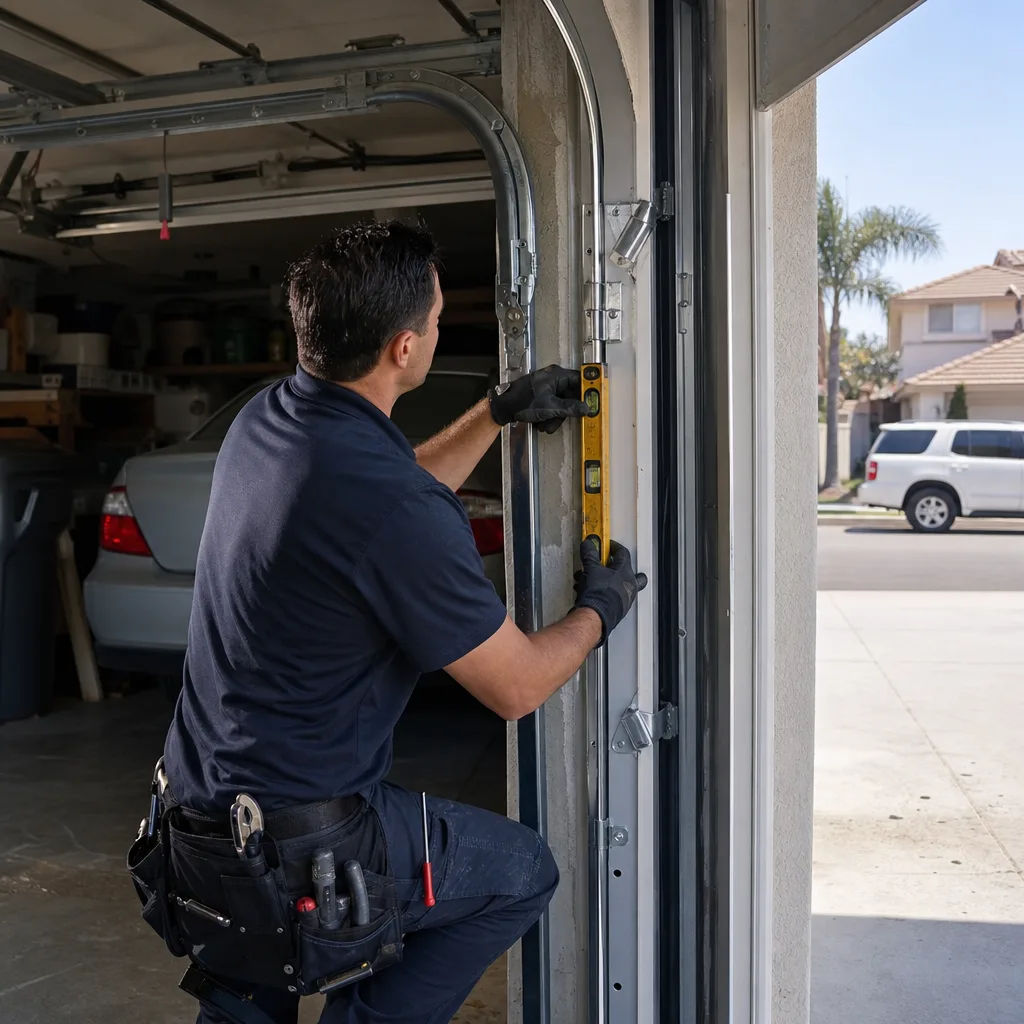
G60 and G90 are galvanized coating designations from the American Society for Testing and Materials. They tell you how much zinc is bonded to the steel per square foot. G60 means 0.60 ounces of zinc per square foot. G90 means 0.90 ounces per square foot. That extra 0.30 ounces is the difference between a door that rusts in 18 months and a door that hasn’t rusted at the five-year mark on the beach side of Huntington Beach.
How to Read the Rating on a Product Sheet
Most garage door product pages list “galvanized steel” and stop there. You have to ask for the substrate spec. The coating weight appears in the technical data sheet, not the marketing one. If the manufacturer doesn’t publish it, ask the installer to get it from their rep. If the installer can’t produce it, that’s information. It means the coating is probably G60 or thinner.
Here is the decision framework in plain terms:
- G90 or better (G115, G140): Standard for anyone within two miles of the coast in Huntington Beach. Expect a 10- to 15-year panel life before repaint, assuming annual washing of the bottom rail.
- G60: Acceptable inland, marginal in Huntington Beach. We have seen failures inside three years at properties east of Bolsa Chica Street and north of Atlanta Avenue, then also at properties a mile inland. The marine layer reaches further than most assume.
- Below G60: Not a coastal door. If a quote comes in unusually low, this is where the savings came from. The door will surface-rust within two years in 92648.
- Aluminum panels: No galvanization needed, since aluminum doesn’t rust. But aluminum dents more easily and transmits heat differently. More on that in the materials section below.
The Local Math
The cost delta between a G60 door and a G90 door runs roughly $75 to $180 per panel section, before any labor difference. On a standard two-car 16-foot door with four panels, that’s $300 to $720 more for the G90 substrate. Spread over a 15-year door life, the added cost is $20 to $48 per year. Spread over the three-to-five-year life of a G60 door near the beach, the replacement cost is dramatically higher.
Marcus Deller, owner of Servo Garage Doors Huntington Beach, puts it this way: the coating weight is the first spec he checks when a customer brings a copy of another company’s written estimate. It’s often the item that was trimmed to make the price look competitive.
- Ask for the coating weight in writing. If the estimate says “galvanized steel” without a spec, ask for the missing number.
- Compare G90 to G90. When comparing two quotes, make sure the coating weights match before comparing the total.
- Check the bottom rail. The bottom section takes the most salt and moisture. Ask whether the bottom rail is reinforced and whether the weather seal is a double-lip design or a single rib.
The Servo Garage Doors Huntington Beach home page covers how we document every specification before any work starts, which means the coating weight appears on the written scope, not in a sales conversation.
Spring Systems: Torsion vs Extension for Huntington Beach Doors
Huntington Beach garage doors are overwhelmingly attached-garage configurations, with standard heights of 7 feet on older homes and 8 feet on newer construction. Those heights define the spring load math, and the spring system decision is where we see the most uninformed buying.
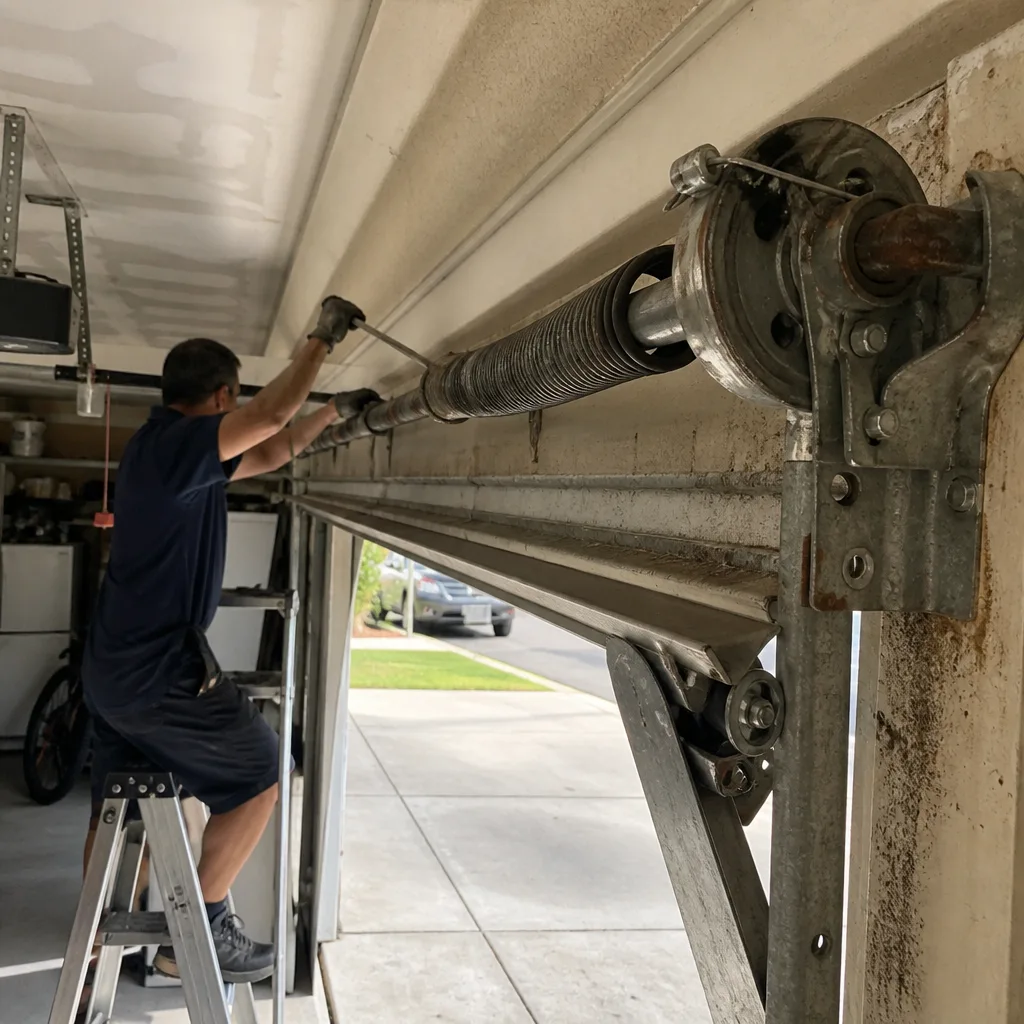
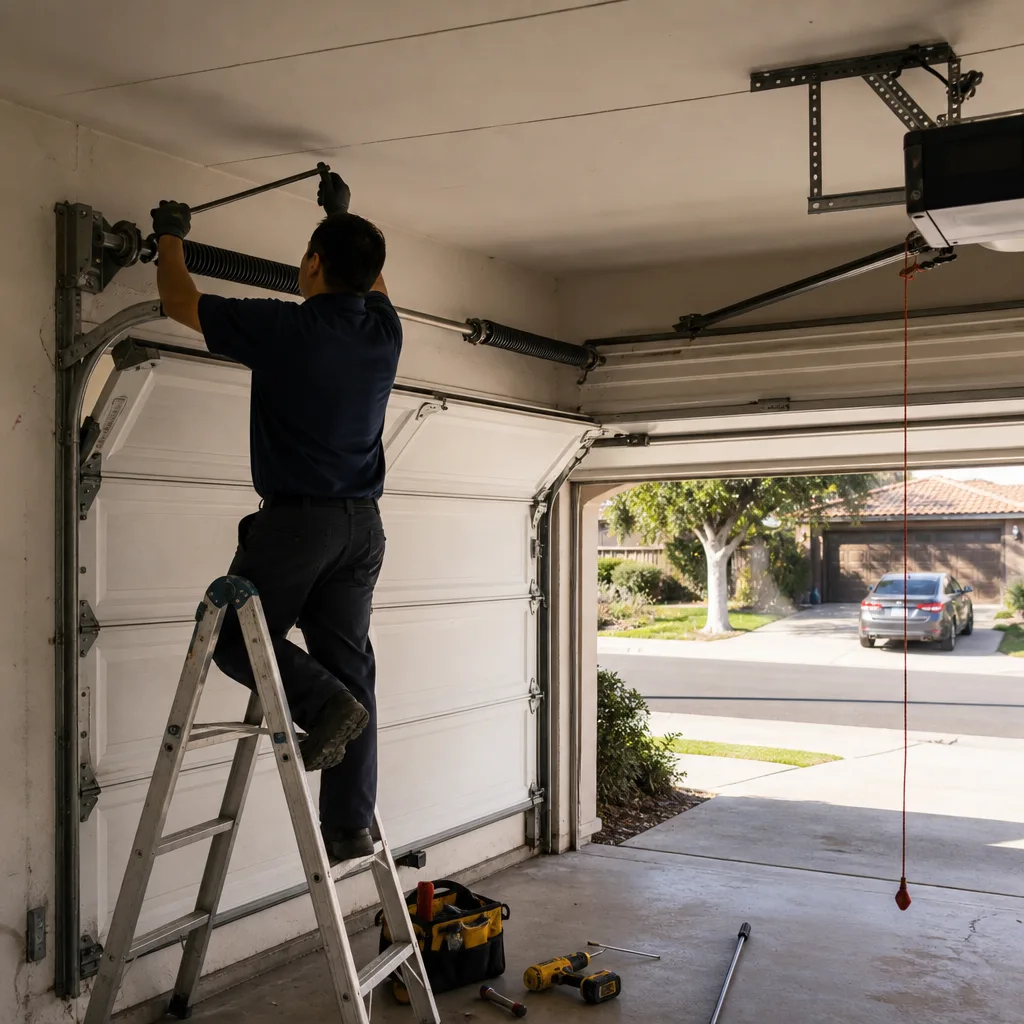
A torsion spring mounts on a shaft above the door opening and winds and unwinds to lift the door. An extension spring mounts on the track and stretches. Torsion springs carry more torque, cycle more times before failing, and when they do break, the failure is contained by the shaft. Extension springs can fling across the garage when they snap unless they have safety cables installed.
The Load Math That Matters
A standard 16-by-7-foot steel door weighs around 180 to 220 pounds. A 16-by-8-foot door weighs 220 to 260 pounds. That weight determines the spring size. A spring that’s undersized will cycle fine for a while and then fail early. A spring that’s oversized makes the opener motor work harder than it should.
The industry rates springs in cycles, where one cycle equals one full open and one full close. Standard-grade springs are rated for 10,000 cycles, which translates to roughly 7 to 9 years of daily use. High-cycle springs from Raynor or Wayne Dalton rated for 25,000 to 30,000 cycles don’t cost three times as much. They typically run 15 to 30 percent more and buy an extra decade of service. In Huntington Beach, where the salt air accelerates metal fatigue at the spring’s connection points, the high-cycle upgrade is the better financial decision for anyone who plans to stay in the home for more than five years.
Which Spring for Which Home
- Torsion springs, high-cycle (25,000+): The default recommendation for 8-foot doors in Huntington Beach. The door weight is higher, the spring works harder, and the failure mode is safer.
- Torsion springs, standard (10,000): Acceptable for a 7-foot door on a rental property with predictable turnover. Live in the home? Step up.
- Extension springs: Common on older Huntington Beach homes built before 1990. They work fine if safety cables are present and the pulleys are in good condition. We replace them with torsion setups when the door height and weight justify it, or when the existing installation is unflagged.
One local note: the spring bracket mounts on many Huntington Beach garages from the 1960s and 1970s are attached to drywall or thin foam board over concrete, not to solid blocking. A spring replacement that doesn’t check the mount integrity sets up a future failure. In our experience, about one in four older Huntington Beach garages has an inadequate spring mount condition that needs addressing before the new spring goes on.
Panel Materials: How Steel, Aluminum, Wood, and Vinyl Age in 92648
The marine layer doesn’t treat materials equally. We’ve watched enough Huntington Beach doors age to say with confidence which materials earn their price and which ones don’t.
Steel: The Best Value, With One Caveat
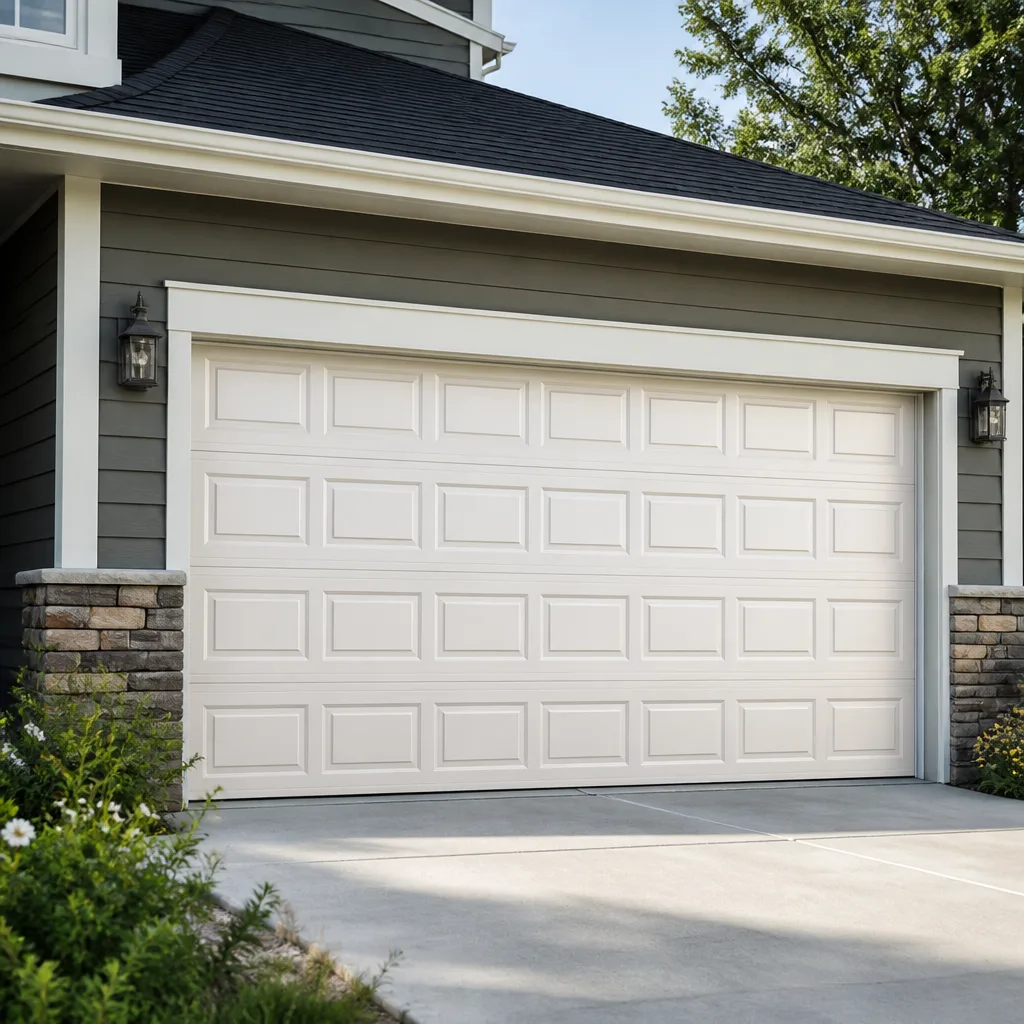
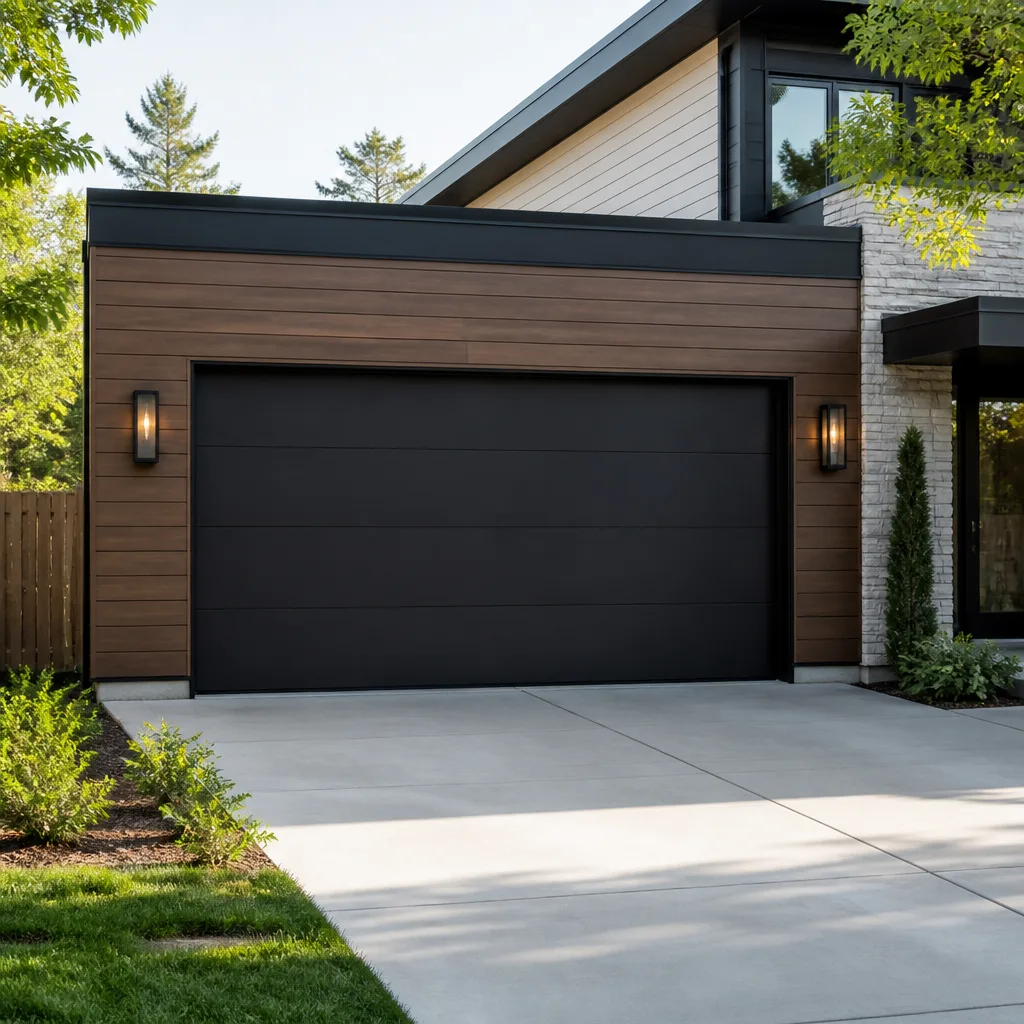
Steel dominates the residential garage door market because it’s strong, paintable, and inexpensive relative to alternatives. In Huntington Beach, the caveat is the galvanized coating weight discussed above. Buy G90 steel, wash the panels twice a year, and the door will hold its finish for 12 to 15 years. Buy G60 and you’ll be repainting at the three-year mark. Steel also accepts insulation better than any other material, which matters for attached-garage homes where bedroom temperatures are affected by the garage door surface. A polyurethane-insulated steel door (R-value 12 to 18) makes a measurable difference on the west-facing units that get the full afternoon sun in the summer.
Aluminum: Corrosion-Proof, Dent-Prone
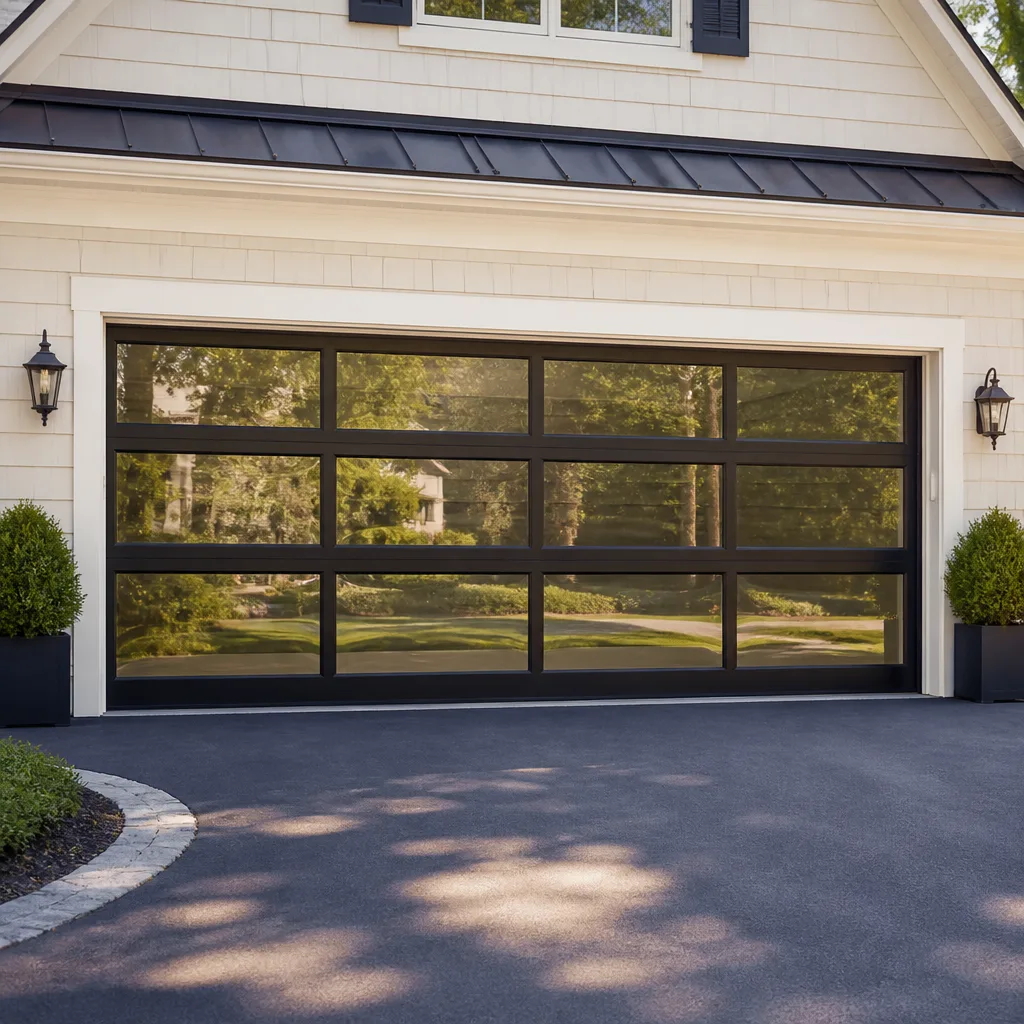
Aluminum doesn’t rust, which makes it the obvious material for first-row beach homes. Wayne Dalton’s aluminum and glass doors are common in the beach-adjacent neighborhoods. The trade-off is dent resistance. Aluminum panels show dings from bikes, lacrosse balls, and the errant trailer hitch. For a homeowner with young kids, that’s an aesthetic risk. For a homeowner without them, an aluminum full-view door is the lowest-maintenance option available in 92648, and it won’t develop the corrosion blooms that galvanized steel eventually gets if the coating is compromised.
Wood: Beautiful, Expensive, and a Five-Year Commitment
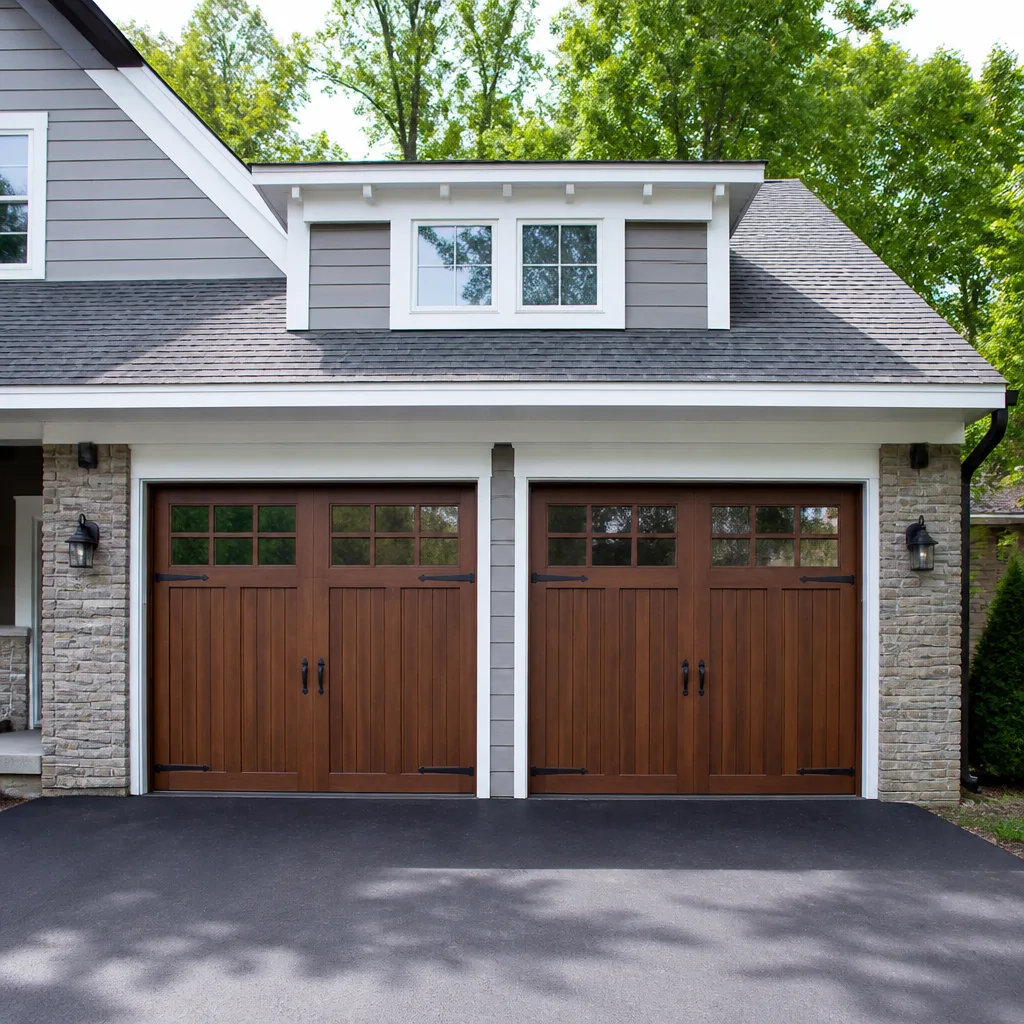
Wood garage doors in Huntington Beach require a different decision framework than wood anywhere inland. The marine layer holds moisture against the wood for hours each morning, and the afternoon sun bakes it out. That daily cycle opens seams, lifts paint, and invites dry rot. A redwood or cedar door that gets sanded and re-oiled every two years, and repainted every five, will last 20 years or more. The same door without the maintenance program starts to fail at the stile joints within five years. Wood is not a bad choice here. It’s a labor commitment.
Vinyl: Durable, With a Fading Timeline
Vinyl garage doors don’t corrode, which sounds good. But vinyl is not UV-stable over the long term, and Huntington Beach’s 281 sunny days take their toll. Surface chalking typically appears around year seven, with color fading becoming noticeable around year nine. Vinyl can’t be repainted easily. When the fade gets bad, the panel is replaced or lived with. For a south-facing garage door with no shade, vinyl is the shortest-lifespan panel choice despite its corrosion resistance.
Fiberglass: The Material That Doesn’t Belong Here
Fiberglass garage door panels carry a gel-coat finish that cracks and yellows under sustained UV exposure. Huntington Beach’s sun is exactly the kind of exposure that causes that failure. Fiberglass doors are uncommon in 92648 for this reason, and the local installers who have been around a while don’t push them. Replacement finish timelines run as short as four to five years on south-facing exposures.
For a complete breakdown of installation-specific considerations and a full brand comparison for coastal panels, see Garage Door Installation in Huntington Beach.
Opener Drive Types: What the Salt Air Does to Belt, Chain, and Screw
The opener sits on the garage ceiling, above the salt accumulation zone, but it’s not immune to the environment. Humidity and airborne salt find their way into the drive mechanism, and each drive type handles that differently.
Belt Drives: The Salt-Air Standout
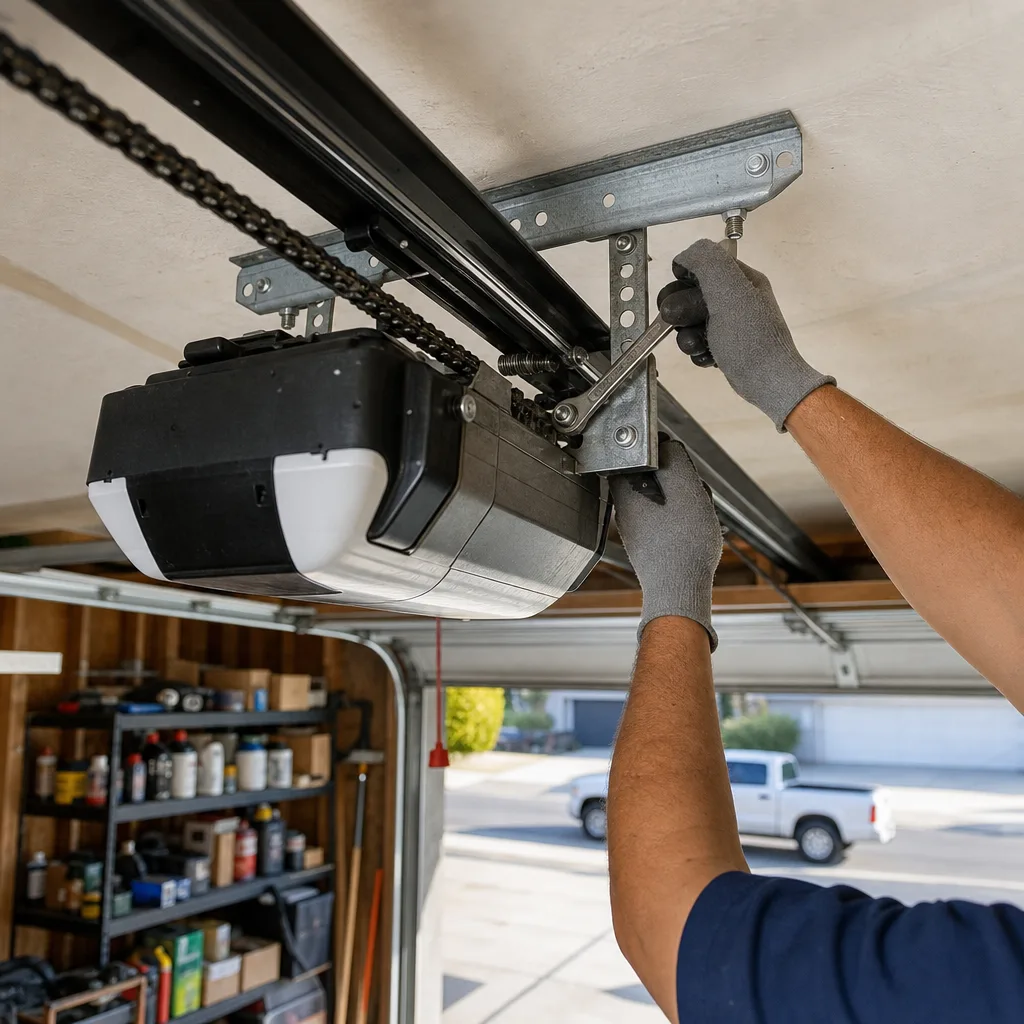
Belt-drive openers from LiftMaster and Chamberlain use a rubber-reinforced belt instead of a metal chain. The belt doesn’t rust, and the drive gear that moves it is usually enclosed or made of corrosion-resistant polymer. In coastal Huntington Beach, belt drives are the most reliable opener type over a 15-year window, and they’re quiet enough for attached-garage homes where a bedroom sits above the garage. The maintenance requirement is minimal: check belt tension annually, lubricate the rail if the manufacturer calls for it, and clean the safety sensor lenses monthly because the marine layer leaves a fine salt film that interrupts the beam.
Chain Drives: The Workhorse With a Lubrication Schedule
Chain-drive openers are the cheapest and most common. The chain is steel, and in Huntington Beach’s damp, salty air, steel chain requires more frequent lubrication than it does inland. We recommend a light machine oil or a manufacturer-specified chain lubricant every four to six months for coastal installations, versus the typical 12-month interval recommended by manufacturers. Miss that schedule and the chain develops surface rust that accelerates link wear. Craftsman chain-drive openers from the 1990s and 2000s are still common in Huntington Beach garages, and the ones that still run quietly have one thing in common: their owners lubricated them seasonally.
Screw Drives: Strong, With a Salt Grinding Problem
Screw-drive openers use a threaded steel rod to move the trolley. They’re powerful and have few moving parts, which made them popular in the early 2000s. The problem in Huntington Beach is that the screw is a metal-on-metal contact point. Salt dust that settles on the threads gets ground into the metal with every cycle, and over time the screw develops polish-wear that makes the mechanism loud. Screw drives can work in coastal garages, but they need monthly screw inspection and lubrication, which is more than most owners will commit to. We don’t recommend screw drives for 92648 unless the garage is unusually well-sealed and the owner wants the power for a heavy door.
Opener Motor and Logic Board
The electronic components of a garage door opener are susceptible to humidity-driven corrosion on the logic board. Garages in Huntington Beach that are not vented or that have a water heater pulling air through the space get condensation inside the opener housing. When we replace openers, we look at the ventilation of the garage as part of the quote. An opener that dies from logic board corrosion at year four is a ventilation problem as much as a quality problem.
For how we handle opener failures and replacements across all three drive types, see Garage Door Opener Repair & Installation in Huntington Beach for specifics.
Huntington Beach Permit Triggers: When a Repair Becomes a Full-Permit Job
Huntington Beach Municipal Code is clearer than most cities about what does and doesn’t require a permit on a garage door. The distinction matters because missing a permit trigger turns a $400 panel replacement into a code-enforcement situation, and the dollar consequence runs higher than most estimates account for.
Here are the triggers as they apply to the majority of Huntington Beach homes:
- Panel replacement that does not alter the opening: No permit required. Swapping out damaged or rusted panels for new ones that fit the existing track system is a straight repair. This applies whether the new panels are steel, aluminum, or another material, as long as the door size and opening don’t change.
- Replacing spring, cables, tracks, or rollers: No permit required. These are mechanical repair items that fall under normal maintenance.
- Changing the garage door size or opening: Permit required. Widening a door opening, raising the header, or converting a double door to two singles involves structural work, and Huntington Beach requires plans, a permit, and an inspection.
- Converting a garage door opening to a wall or window: Permit required. This is a structural alteration that also triggers zoning review, since the loss of covered parking may need to be compensated. The fine for unpermitted conversion in Huntington Beach runs into the thousands, and the city can require the original opening to be restored.
- Installing a new door on a home in the historic district: Permit and design review required. Some Huntington Beach neighborhoods fall under historic preservation overlay zones, and visible garage doors are reviewed for style and material.
The Dollar Consequence of Missing a Permit
If a contractor tells you no permit is needed and the city determines one was required, you as the homeowner are on the hook for the corrective permit, the inspection fees, and any rework the inspector requires. Typical corrective permit costs in Huntington Beach run $400 to $1,200 depending on scope, not including any changes the inspector mandates. The contractor who didn’t pull the permit is usually not contractually responsible for those costs unless the written scope explicitly addressed permits.
Clause 1 of The Haven Standard requires a written scope before work starts, and that scope includes the permit determination. A written record of the permit check is the only documentation that protects you in a permit dispute, and it’s part of what we hand over before the first tool comes out.
Maintenance Schedules That Work at a Quarter Mile From the Coast
Garage doors in Huntington Beach don’t need more maintenance than doors anywhere else. They need different maintenance, timed to the actual failure mechanisms in this climate. Here is the schedule we recommend for 92648 properties, based on what we see on service calls.
Monthly, Two Minutes
- Wipe the safety sensor lenses with a dry cloth. The marine layer deposits a fine salt film on the lenses that diffracts the infrared beam and causes phantom reversals.
- Inspect the weather seal at the door bottom for cracking. The salt and sun harden the rubber faster here than inland. A torn seal is how salt water wicks under the door and starts rusting the bottom rail from the edge.
Every Six Months, Ten Minutes
- Wash the door panels with mild soap and water, then rinse thoroughly. Pay attention to the bottom rail, where salt accumulates most. This is not a cosmetic step. It removes the chloride deposits that drive rust.
- Lubricate the hinges, rollers, and torsion spring with a lithium-based spray or a garage-door-specific lubricant. Avoid WD-40 on these parts: it’s a solvent, not a long-term lubricant, and it strips the protective film.
- Check the door balance by disconnecting the opener and manually lifting the door to the halfway point. If the door stays put, the springs are doing their job. If it drops or climbs, the spring tension is wrong and needs adjustment. Don’t adjust torsion springs yourself. They are under load tension and can cause serious injury without the right tools and training.
Every Two Years, Annual Inspection
- Inspect the track mounting brackets for rust at the attachment points. The fasteners are often the first thing to corrode in a marine environment, and a loose track is a derailment waiting to happen.
- Check the opener rail and trolley for smooth movement. A trolley that shudders or binds during travel is telling you something about the drive mechanism.
- Examine the panel finishes for early rust blooms, especially at the bottom edges and hinge points. Early rust is treatable. Late rust is a panel replacement.
The maintenance work above is not complicated, but the spring and cable components involve stored energy. If the door balance check shows a problem, or if anything in the monthly walkaround seems off, call a professional. A high-tension spring or cable failing under load is a genuine safety hazard, not a DIY inconvenience.
Common Mistakes to Avoid
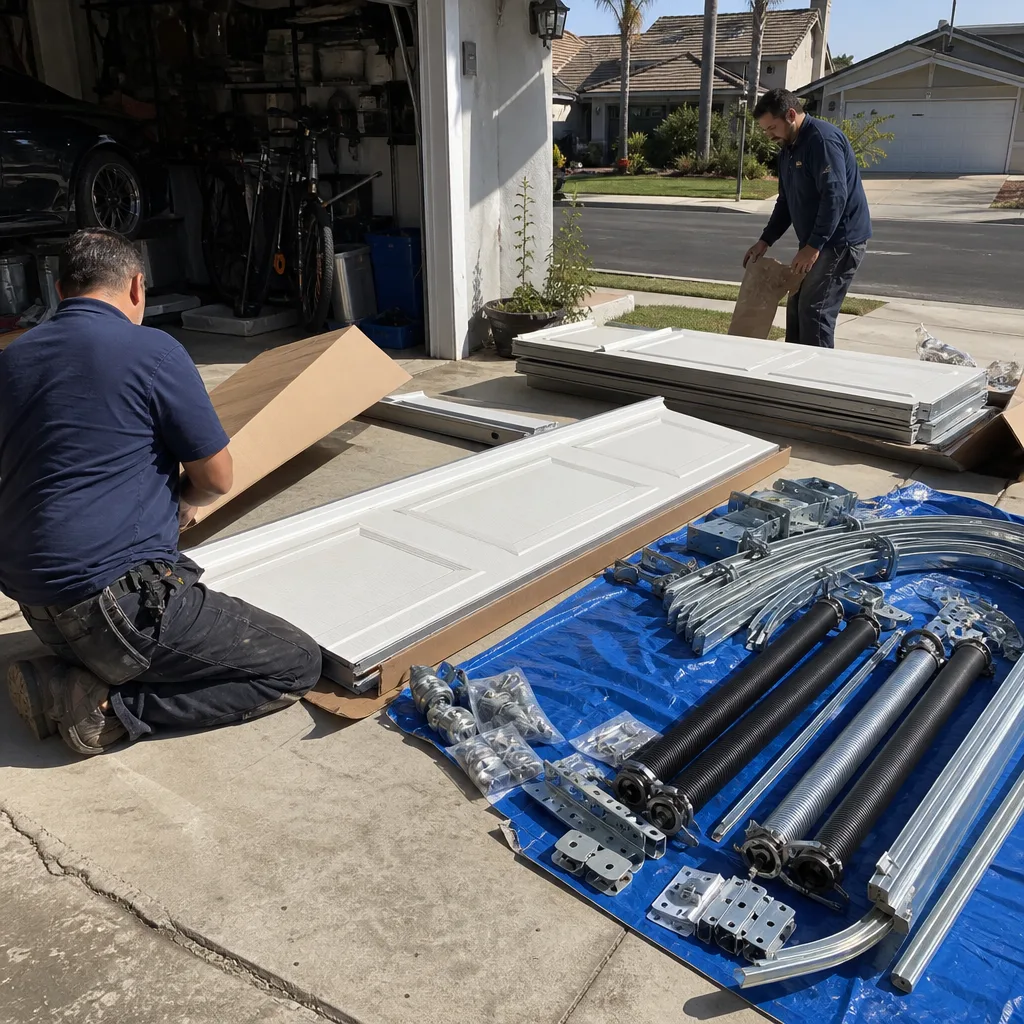
- Buying G60 galvanized steel on a coastal property. The price difference looks small until the rust shows up at the 18-month mark and the entire door needs repainting or panel replacement.
- Replacing an extension spring without checking the mount integrity. Many Huntington Beach garages from the 1960s and 1970s have spring mounts attached to drywall, not blocking. A new spring on a bad mount is a future failure.
- Skipping the lubrication schedule on a chain-drive opener. The marine layer corrosion accelerates chain wear dramatically. A chain that would last 15 years inland can start binding at year five in 92648 without seasonal oiling.
- Assuming all “coastal rated” doors are the same. The coating weight is the number that matters. A coastal-rated door with G60 coating is still a rust risk. Get the spec in writing.
- Ignoring the permit trigger when changing a garage door opening. The city’s code enforcement division does inspect permit records on homes in Huntington Beach, and unpermitted structural work is one of the most common findings during property sales.
- Picking wood panels without budgeting for the maintenance cycle. Wood doors in Huntington Beach need repainting every five years and re-oiling every two. Skip that and you’ll be replacing the door at year eight.
- Choosing a vinyl door for a south-facing garage. The UV load fades vinyl faster than almost any other material, and there’s no repainting option once the fade gets bad.
When to Call a Professional
If your door balance check fails, if the torsion spring is broken (you’ll hear it, and the door won’t lift), or if the door is off its track and hanging weight, stop using it and call a professional. A door under tension stores enough energy to cause serious injury. The same applies to cable replacement and any repair involving the torsion shaft. For material and finish questions, a written second opinion can be worth more than the time it takes to get one, especially if you have an estimate from another company that doesn’t list the coating weight. Servo Garage Doors Huntington Beach offers free estimates in Huntington Beach, and our technicians arrive with a documented, written scope before any work is approved. Call (657) 256-6126.
Frequently Asked Questions
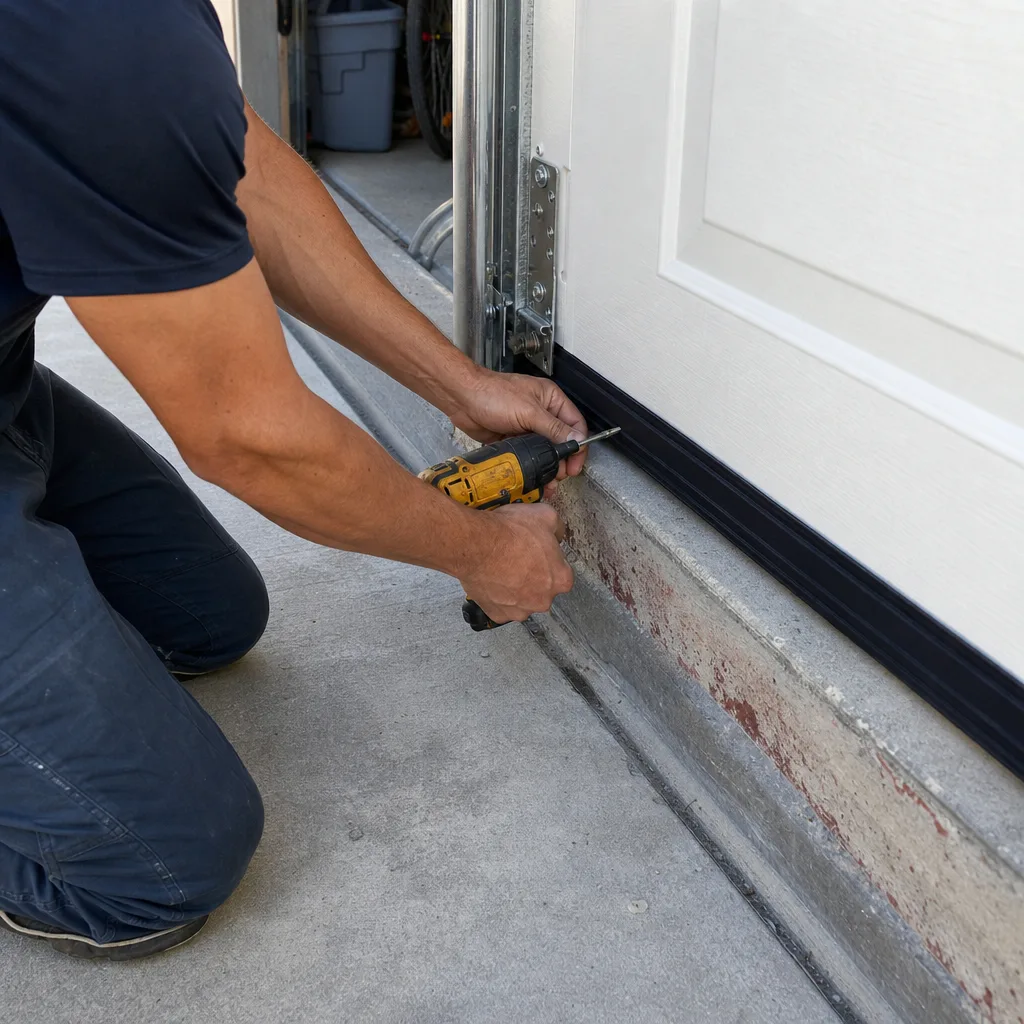
A complete garage door replacement in Huntington Beach runs between $1,400 and $3,600 installed, with the spread driven by panel material, insulation level, coating weight, spring cycle rating, and whether the project triggers permit needs. A basic steel G90 door with standard springs lands near the lower end, while a high-cycle torsion system with polyurethane insulation, quiet rollers, and aluminum or raised-panel steel runs toward the upper end. Call (657) 256-6126 for a written, flat-price estimate before any work is scheduled.
G90 galvanized steel with polyurethane insulation is the strongest all-around choice for Huntington Beach, balancing rust resistance, dent resistance, and insulation performance. For more guides & resources on choosing materials, explore our blog. Aluminum is the best choice for beachfront or very-close-to-water properties where corrosion is the dominant concern, though it dents more easily. Wood works if you’re committed to a two-year re-oiling cycle and a five-year paint cycle. Vinyl and fiberglass are the weakest materials for this specific environment.
Standard 10,000-cycle torsion springs on a Huntington Beach door typically last 7 to 9 years under daily use, with coastal salt accelerating metal fatigue at the connection points. High-cycle 25,000- to 30,000-cycle springs from brands like Raynor or Wayne Dalton usually last 15 to 20 years and cost only 15 to 30 percent more upfront. If you plan to stay in the home past the five-year mark, the high-cycle upgrade is the better financial decision. Call (657) 256-6126 for a spring inspection and a written price.
Replacing garage door panels without changing the door size or the opening does not require a permit in Huntington Beach. Changing the opening size, converting the garage opening to a wall, or working on a home in a historic overlay zone does require a permit and possibly design review. Our written scope includes the permit determination, so you know before work starts whether the project is repair or construction. Call (657) 256-6126 for a free estimate with that determination in writing.
A belt-drive opener is the best choice for coastal Huntington Beach because the belt doesn’t corrode and the polymer drive components hold up better than steel chain or screw mechanisms in salt air. LiftMaster and Chamberlain are the two most common belt-drive brands we install, and they outperform chain drives from reliability and noise standpoints in attached-garage homes. Chain drives work but need lubrication every four to six months in this climate, not every 12.
Look at the bottom rail where the weather seal attaches, the hinge points, and the track mounts. Surface rust shows as an orange stain or bubbling under the paint. By the time you see it, the galvanized coating has been spent at that spot. The fix is to remove the corrosion and repaint with a marine-grade paint, or replace the panel if the cancer has perforated the steel. An annual inspection catches early-stage rust before it reaches panel-replacement stage.
The Bottom Line
Three decisions matter most for a garage door in Huntington Beach: the galvanized coating weight on the steel, the spring cycle rating that matches the door weight, and the opener drive type that suits the coastal environment. Get those three right, and the door will serve 15 to 20 years with reasonable annual maintenance. Get them wrong, and the marine layer starts collecting on the mistake within 18 months. The guide above gives you the specs to ask for and the numbers behind them, so you can hold any quote to the standard your particular zip code requires. The rest is a written price and a phone call.
Written by Marcus Deller, Owner at Servo Garage Doors Huntington Beach, serving Huntington Beach since 2015.