
Last updated September 19, 2026
Full 25-point door and opener safety check with every visit - springs, cables, rollers, tracks, and your LiftMaster or Chamberlain opener included
You get a price before we start. It does not change when the truck arrives.
 Before
 After
After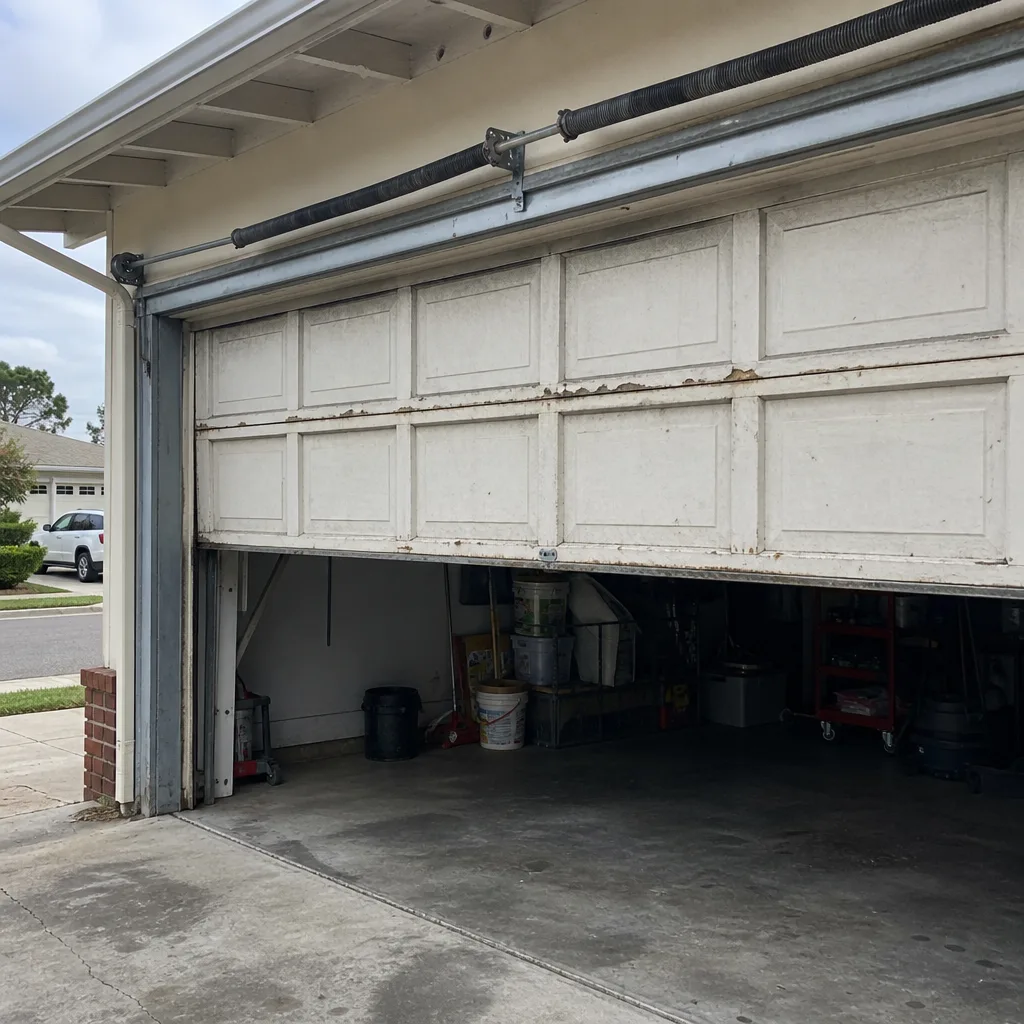 Before
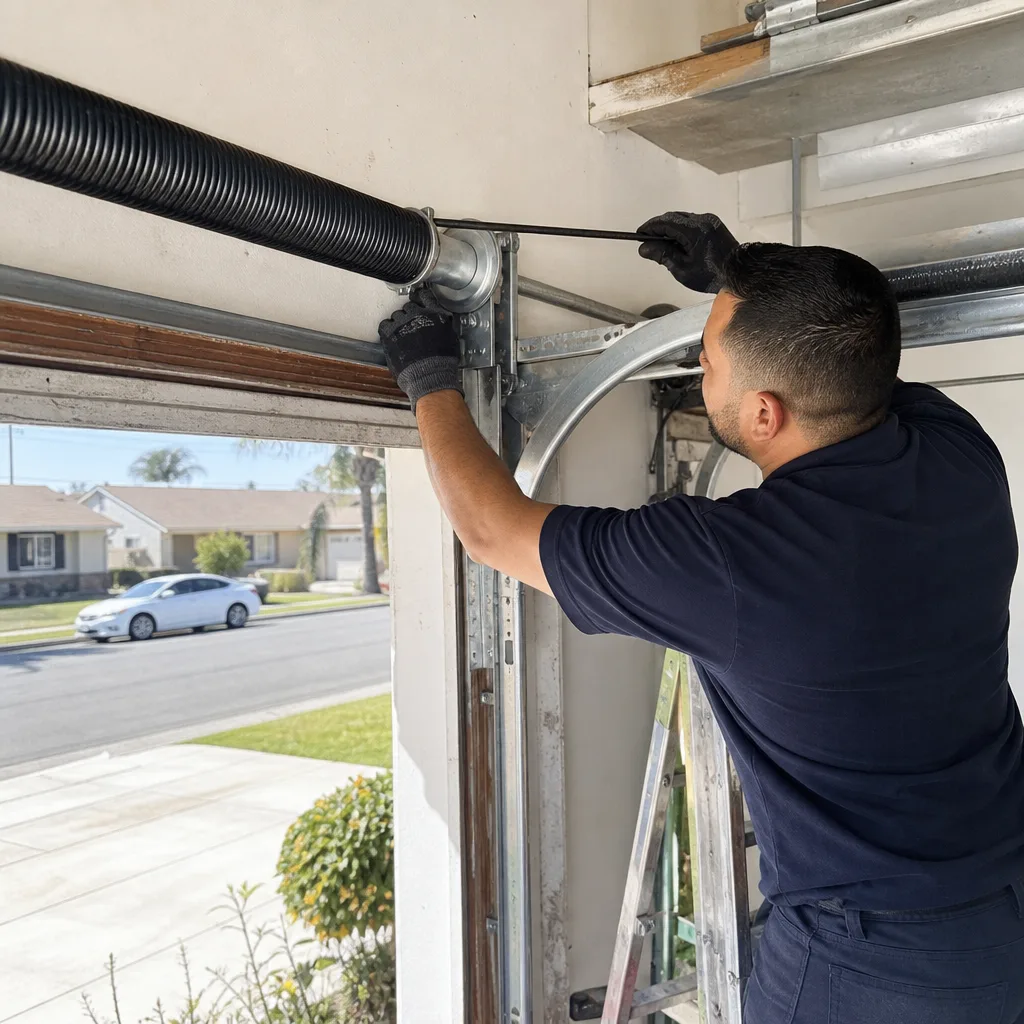 After
After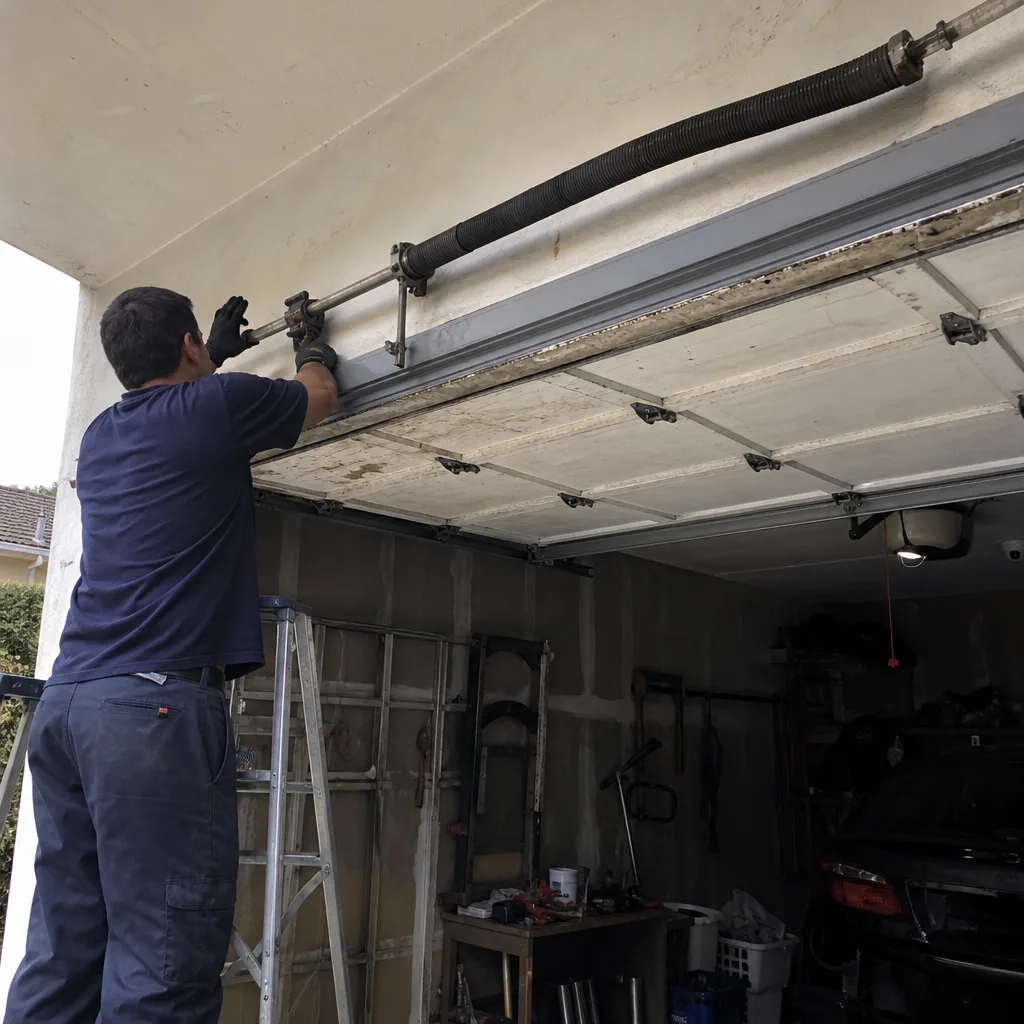 Before
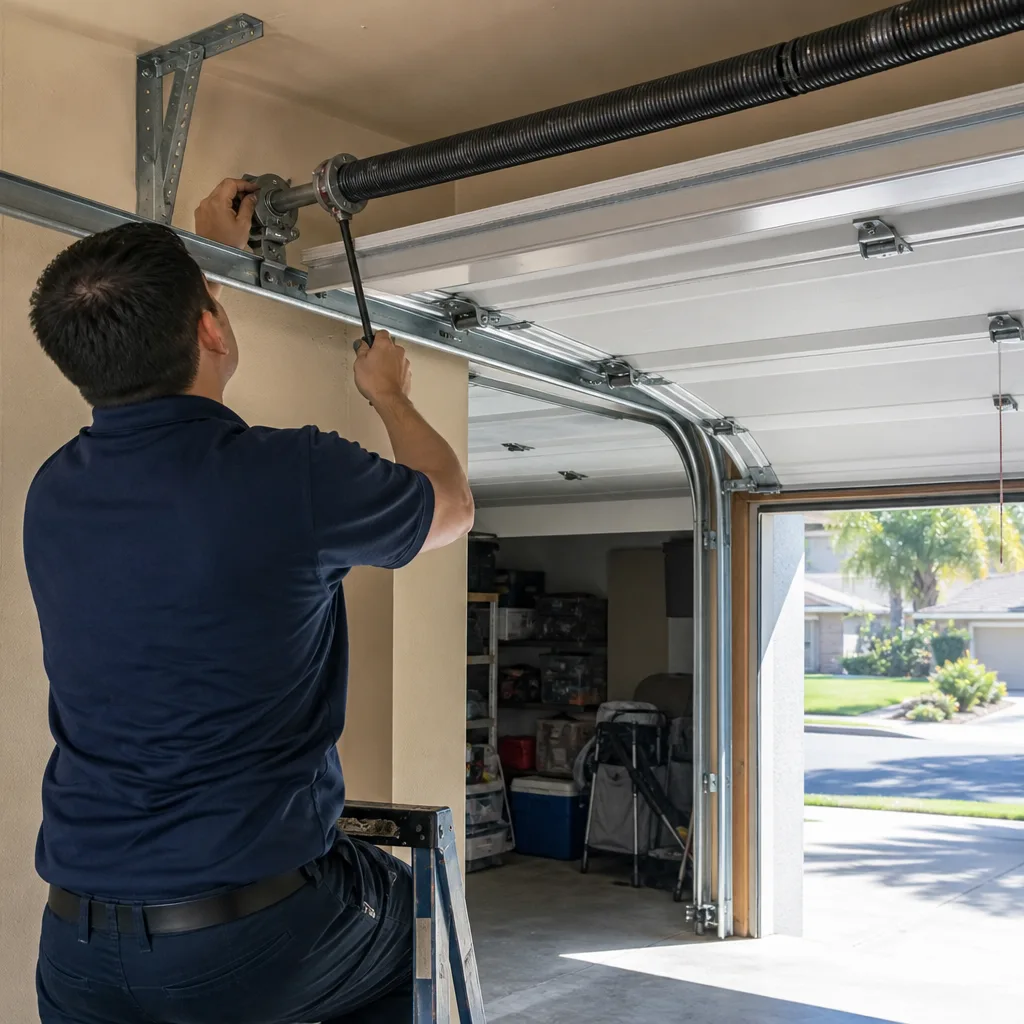 After
AfterHow to Hire a Garage Door Contractor in Huntington Beach: A Step-by-Step Guide
A five-star Yelp rating tells you the customer was satisfied. It doesn’t tell you whether the technician photographed the broken torsion spring before quoting a replacement, wrote the price down before starting, or pulled the permit the job required. Those three behaviors are absent from most review systems, and absent from most contractor pitches. This guide gives you a screening process that filters Huntington Beach contractors by documentation behavior, not by star count. For more guides & resources, see our blog. It’s the difference between hiring someone who talks like a professional and someone who can prove it on paper.
Quick Answer
Hiring a garage door contractor in Huntington Beach comes down to verifying the CSLB license, asking four specific questions about written pricing before scheduling any estimate, and refusing to sign a contract that lacks itemized part numbers, labor costs, and warranty terms. The contractor who voluntarily documents everything before work starts is the one worth hiring, and that’s the exact behavior this guide teaches you to test for. A garage door is the largest moving object in your home, and the cheapest bid with no paper trail is the most expensive mistake you’ll make this year.
Table of Contents
- Step 1: Verify the CSLB License Before the First Phone Call
- Step 2: Ask These Four Questions Before Scheduling an Estimate
- Step 3: How to Structure the First Phone Call
- Step 4: What a Complete Contract Must Include
- Step 5: Red Flags Specific to Huntington Beach
- Step 6: Comparing Estimates Without Getting Played
- Step 7: What You Should Receive When the Job Is Done
BeforeAfterStep 1: Verify the CSLB License Before the First Phone Call
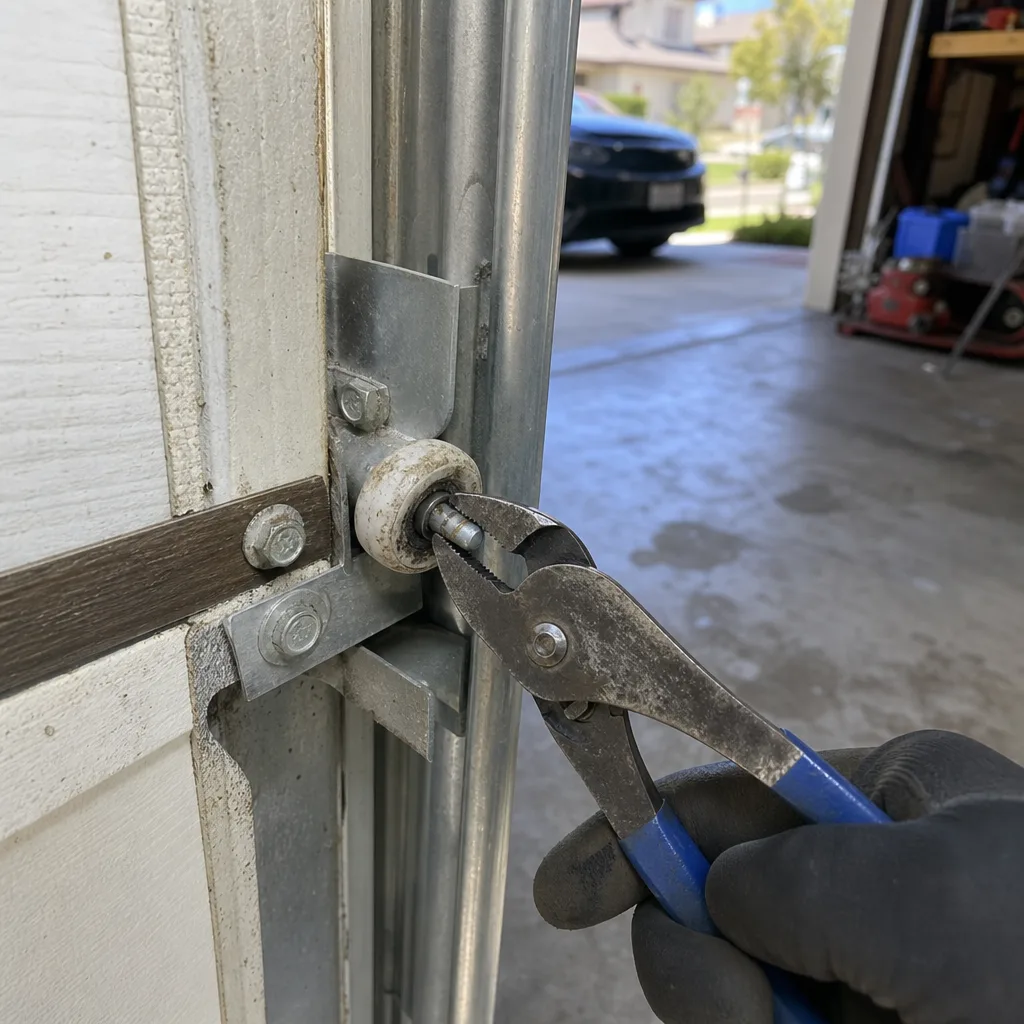
Before you call anyone, you should spend two minutes on the Contractors State License Board website. Type in the business name or license number and confirm three things: the license is active, the classification covers garage doors, and the listed address isn’t a P.O. box in a different city. In Huntington Beach, you’ll run into plenty of unlicensed operators working door-to-door in neighborhoods like Edwards Hill and Glen Mar, especially after a storm or during the spring rush when homeowners notice rusted hardware. They’ll offer a cash price and a handshake. You’ll have no recourse when the torsion spring they installed snaps six weeks later.
The classification matters more than most homeowners realize. A general B license lets someone build an addition, frame a wall, pour concrete. It does not mean they know how to balance a 400-pound door on a torsion spring assembly. Garage door work falls under C-61/D28, a specialty classification covering the installation, repair, and servicing of garage doors and related hardware. A contractor holding a B license without the D28 specialty is technically allowed to do garage door work only if it’s incidental to a larger construction project. For a standalone spring replacement or opener install, the D28 is the credible credential.
Marcus Deller, owner at Servo Garage Doors Huntington Beach, puts it plainly: “The license classification is the first paper filter. If someone won’t give you their license number before they see the garage, that call is over.” Servo operates as an independently owned and operated business under The Haven Standard, holding its own license and insurance. The license number lives on the page, not buried in fine print.
While you’re on the CSLB site, check the contractor’s insurance status. California requires workers’ compensation coverage for any contractor with employees. If the person working in your garage gets hurt and the contractor carries no workers’ comp, that claim can land on your homeowners insurance. Verify it’s active, not just listed in the marketing copy.
Step 2: Ask These Four Questions Before Scheduling an Estimate
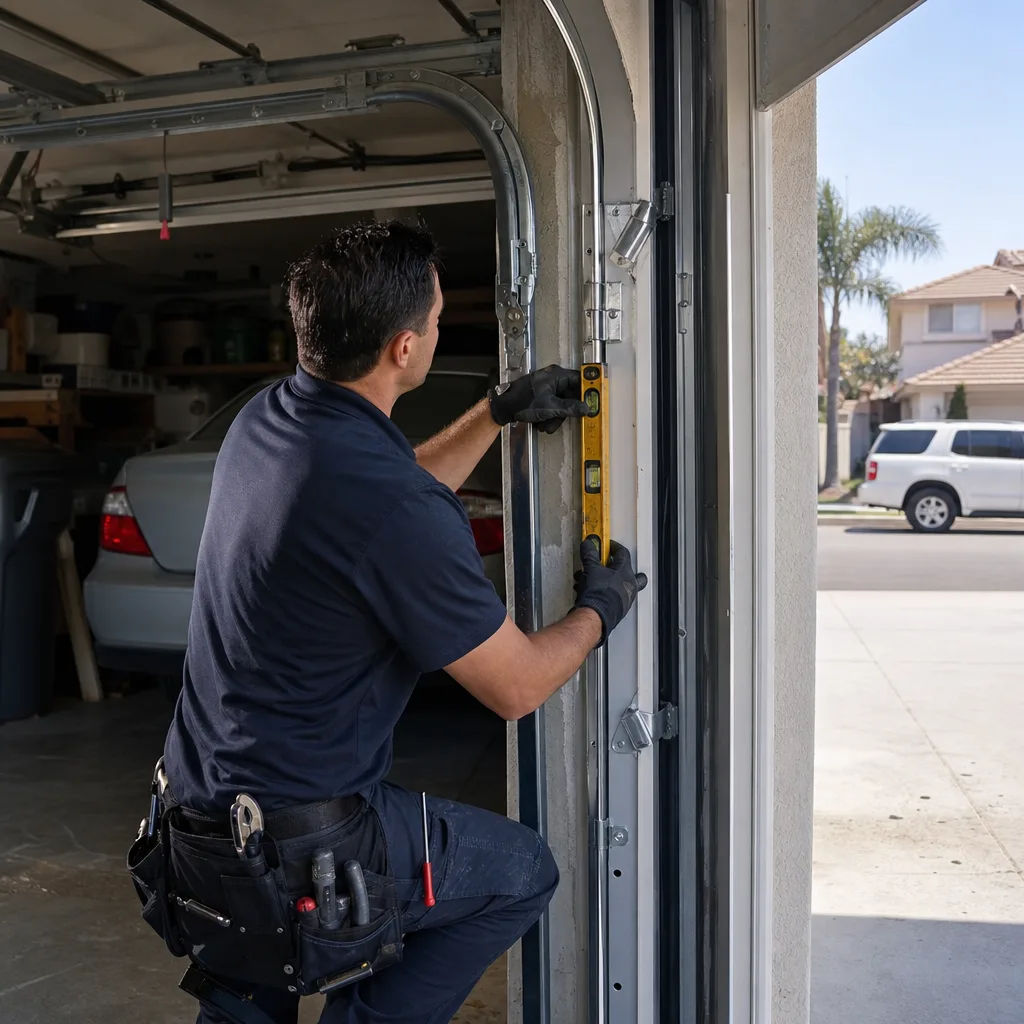
You don’t need a contractor in your driveway to screen them. Four questions, asked on the first phone call, will separate the documenters from the talkers. The answers signal what leaving will look like and what the invoice will look like when nobody’s watching.
- “Will the quote be itemized in writing before any work starts?” The correct answer is yes, without hesitation. A written price and written scope delivered before work begins is Clause 1 of The Haven Standard, the documentation system Servo Garage Doors works under. If the contractor says they’ll “take a look and let you know” or that pricing “depends on what we find,” they’re describing a verbal estimate, which is how a $190 spring repair becomes a $540 invoice when the truck’s in the driveway.
- “Will you show me the failed part before you quote a replacement?” A legitimate contractor photographs the broken component, shows it to you, and walks through why it failed. Clause 4 of The Haven Standard is why Servo technicians photograph the failed part before quoting a replacement. If a contractor won’t let you see the broken spring, roller, or logic board, they’re asking you to fund their parts markup sight unseen.
- “Is your license classification D28 for garage doors?” A yes with a license number you can verify is confidence. A mumbled “we’re fully licensed” followed by a subject change is a red flag. Ask for the number. Check it while they wait.
- “What documentation do I receive when the job is done?” You want a specific answer: a written warranty, a photo record of findings and completed work, an invoice matching the original quote. A vague “you’ll get a receipt” tells you the contractor has no system for proving their work. Our customers receive a documented photo record on every visit, tracing back to the founding rule Servo was built on in 2015: the customer sees the failed part before anyone quotes a replacement.
What evasive answers signal is simple: if a contractor won’t commit to writing things down before they drive to your house, they will be even more reluctant after they’re in your driveway. The entire pitch flips once they’re on site. At that point, urgency does the selling. Your job is to make sure it never gets that far.
Step 3: How to Structure the First Phone Call
The first call is where most homeowners lose the leverage. They call, describe the problem with uncertainty (“the door makes a noise, I think it’s the spring?”), and the contractor says they’ll come out for a free estimate. The word free does the heavy lifting here. It’s not free. You’re paying for it in the form of a compressed negotiation once the contractor is in your driveway holding a flashlight and a clipboard.
Instead, structure the call like this. Say what the door is doing in plain terms: it’s stuck halfway, it’s sagging on the left side, the opener runs but the door doesn’t move, the spring snapped. Then ask for a realistic labor range over the phone, before anyone drives anywhere. A flat labor range of $180 to $340 for a standard torsion spring replacement is what a competent Huntington Beach contractor can quote without seeing the job, because the labor itself doesn’t change much. Parts vary. Labor doesn’t drift by $400 without a reason.
If the contractor won’t give you any labor range on the phone, don’t schedule the estimate. That refusal is a boundary violation of the most practical kind: they are withholding information you’ll need, and they’re doing it before you’ve paid them a dime. What will they withhold after they’ve started?
Also ask about response time. For non-emergency work, a two-to-three-day window is normal in Huntington Beach. For a door that won’t close at all, you need a company with live phone coverage around the clock, because a stuck-open garage is a security risk to the entire house. Servo Garage Doors answers calls with a live person 24/7, including holidays, and emergency calls get a named technician and an on-the-way text, not a callback window. That’s not a marketing feature. It’s the difference between a door that closes tonight and one that stays open until Monday.
Step 4: What a Complete Contract Must Include
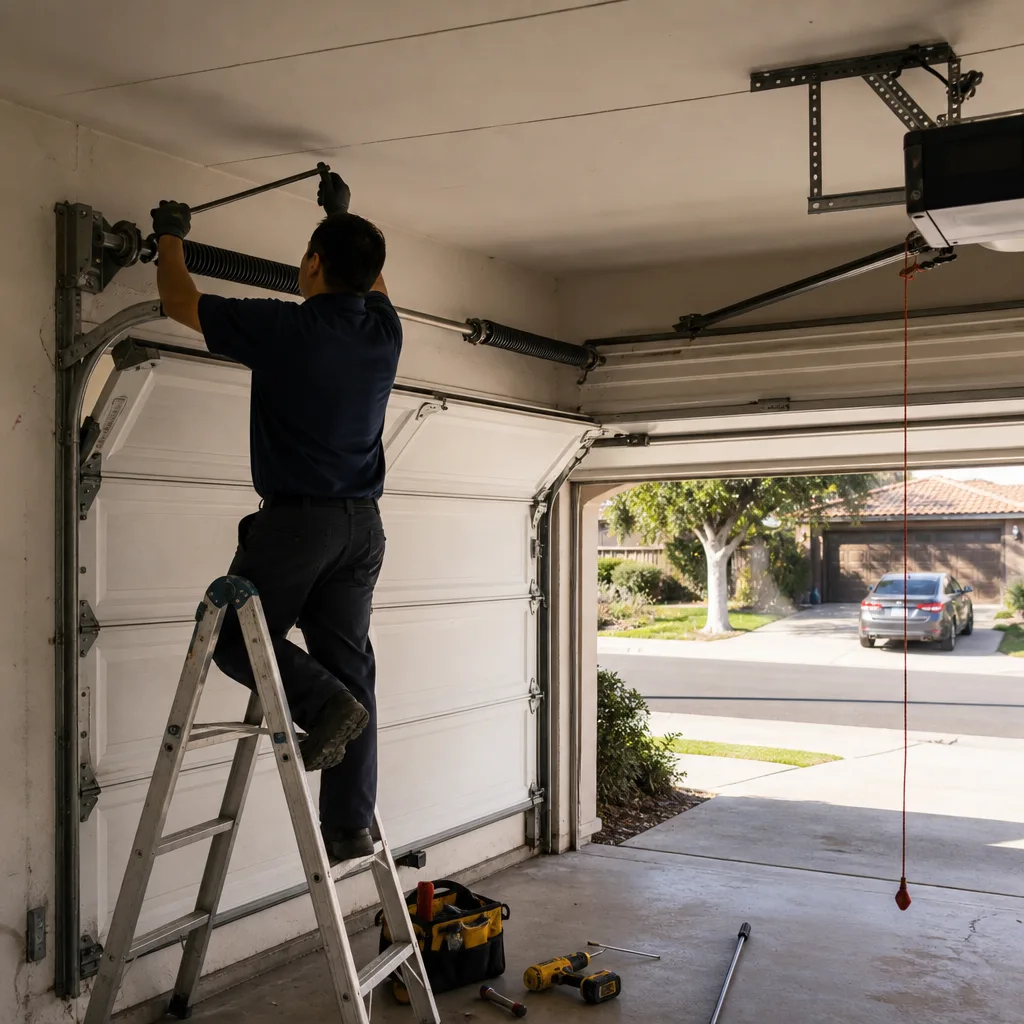
A complete garage door contract in California isn’t a list of promises typed into a smartphone notes app. It’s a written document with itemized specificity. If any of the following four elements is missing, the contract is incomplete, and you should refuse to sign.
- Written part numbers. Not “new spring” but the actual manufacturer part number, e.g., “Clopay 0.207-inch wire diameter torsion spring, 24-inch length.” Part numbers let you verify what was actually installed. They also prevent the classic bait-and-switch where the quote used premium Amarr hardware and the install used generic off-brand parts that rust within a season in Huntington Beach’s salt air.
- Written labor cost. A flat number in dollars, separated from parts. If the contract says “labor: $220” then that’s the labor. If it says “labor: as needed,” you’re signing an open check that the contractor fills in after the work is done. That’s not a contract. That’s a blank authorization.
- Written warranty terms. What’s covered, for how long, and what voids it. A torsion spring might carry a two-year part warranty. A Wayne Dalton section might carry one year. The point is that the terms exist in writing before you sign. Servo’s 365-Day Done Right Promise is written into the standard: if a repair is not right, Servo makes it right, backed by The Haven Standard and a terms page, not a handshake.
- The permit responsibility clause. Most garage door replacements in Huntington Beach don’t require a permit. But new door installations that alter structural framing, and some conversions involving the fire-rated assembly between the garage and the living space, can trigger permitting requirements. Your contract should state who is responsible for pulling permits if any are required. If the contractor says “we’ll handle it” but won’t put it in the contract, assume you’ll be handling it when the city inspector asks who’s responsible.
The written-price-first system makes all of this moot. When every quote is a flat, written price with a written scope delivered before work starts, the contract is just the same document you already saw on the estimate. There’s no surprise invoice at the end because the price was set at the beginning. That’s the whole point.
Step 5: Red Flags Specific to Huntington Beach
Huntington Beach’s garage door market has its own failure patterns, and you should know them before you start taking bids. Coastal salt air accelerates corrosion on rollers, hinges, and cable hardware. The temperature swings between the cool marine layer and the inland heat put repeated stress on torsion springs, which is why spring failures cluster in early spring and late fall. And the county’s building codes impose fire-rating requirements on garage-to-house door assemblies that unlicensed operators routinely ignore.
Watch for these specific red flags:
- High-pressure same-day replacement pitches. A contractor who arrives for a $95 tune-up and immediately starts talking about how your entire door needs to be replaced today, right now, while the truck is here, is running a sales script, not a diagnosis. In HB’s competitive market, the tune-up was the loss leader. The replacement pitch was the entire business model. No legitimate contractor pressures you into a $2,500 job without giving you time to compare written estimates.
- Reluctance to show the failed component before quoting. If a contractor won’t photograph the broken spring and show it to you, walk them out. The photo rule is the single best fraud filter in the trade. It costs nothing to take the picture, which means refusing to show it is a choice.
- Unlicensed operators working door-to-door in residential neighborhoods. They cluster after storms and seasonal transitions. They offer cash pricing and no documentation. Here’s the tell: ask for their CSLB license number and watch what happens. A licensed contractor recites it from memory because they write it on every invoice. An unlicensed operator fumbles and then pivots to a discount.
- “Free estimate” without a written labor range on the phone. The free estimate is often the start of a bait-and-switch because it gets the contractor into your driveway where social pressure does the closing. That’s why the first phone call should extract a realistic labor range before anyone drives to your house.
- Fake parts markup on premium brands. You ask for Clopay or Amarr because you’ve researched. The contractor quotes a price that’s 40 percent above retail and calls it “installation overhead.” A written itemized quote with part numbers kills this. You can call the supplier and check the retail price. A contractor that won’t give you part numbers is hiding something.
Huntington Beach is a big enough market to support plenty of honest, licensed D28 specialists. You don’t need to settle for the door-knocker with a clipboard he printed at home.
Step 6: Comparing Estimates Without Getting Played
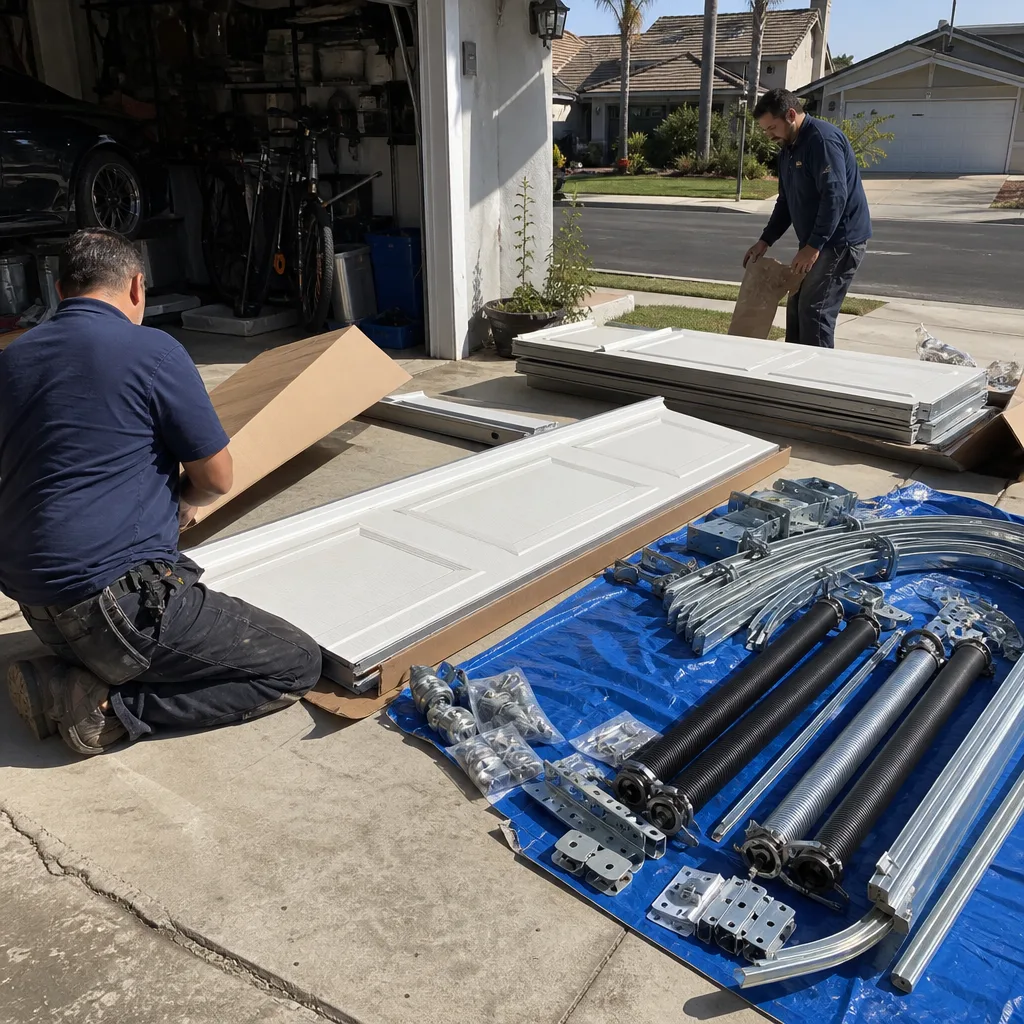
Most homeowners compare estimates by looking at the bottom line and picking the cheapest one. That’s the wrong axis. Price only tells you what a contractor is willing to charge today. You want to compare method, not just cost. Two estimates for the same job can be $600 apart for reasons that have nothing to do with quality of workmanship.
Here’s a five-point frame for comparing bids:
- Is the price flat or hourly? A flat price means the contractor is accountable to the number. An hourly rate means you’re paying for their traffic problems. In Huntington Beach, where the 405 and PCH can turn a 20-minute drive into an hour, hourly billing quietly taxes you for things you didn’t cause.
- Are the part numbers identical? If one bid quotes a Clopay spring and the other quotes “spring, generic,” the bids aren’t comparing the same job. Mark the parts up by checking the manufacturer’s retail price. If the numbers are absent, you can’t check anything.
- What’s the warranty period per part? A spring warrantied for one year is different from a spring warrantied for three. Don’t compare the top-line price without reading the warranty line underneath it.
- What documentation do you receive when the job is done? Servo includes a documented photo record on every visit: the customer sees the failed component and the completed work. If one bid includes this and another doesn’t, they’re not the same job description, even if the line item says the same thing.
- When do they need a decision? A contractor who needs an answer today, while the truck is still in the driveway, is not selling a service. They’re running an emotional close. The best bids leave you room to compare.
If you have a written estimate from one company and want a sanity check, bring it to another contractor. Servo offers a Free Second Opinion on any written estimate from another company. Bring the paperwork. The comparison gets easier when the numbers are all on paper and you can see what’s different.
Step 7: What You Should Receive When the Job Is Done
The job isn’t over when the door goes up and down. It’s over when you have documentation that proves what was found, what was replaced, and what you’re covered for. Here’s what a complete closeout should include in Huntington Beach:
- A photo record of findings and completed work. You should be able to see the broken spring next to the new one. You should see the worn cables that got replaced. If you can’t see what was done, you’re being asked to take it on faith, and faith is what you were trying to avoid by hiring a documenter in the first place.
- An invoice matching the original quote. The final number should be identical to the written price you approved before work started. If it isn’t, there should be a written explanation for the change, delivered before the work was done, with your signature on the amended scope. If there’s no signature and the number moved, that’s not an invoice. That’s a surcharge.
- The written warranty. Not a verbal promise. A written warranty with dates, terms, and the name of the person responsible for honoring it. Servo’s 365-Day Done Right Promise is the service warranty: if it’s not done right, we make it right, backed by The Haven Standard and a terms page.
- A clean work area. This sounds trivial. It isn’t. A technician who leaves your garage floor swept and the old parts in a box is a technician who works under a system. A technician who leaves old springs on the floor and cable grease on the wall is a technician with no system, and the work will reflect that.
The documented photo record traces back to the rule Servo was founded on in 2015. Before any quote, the failed component gets photographed. Before any invoice, the customer sees the completed work. It’s not a selling point. It’s a paper trail, and the paper is the whole point.
Common Mistakes to Avoid
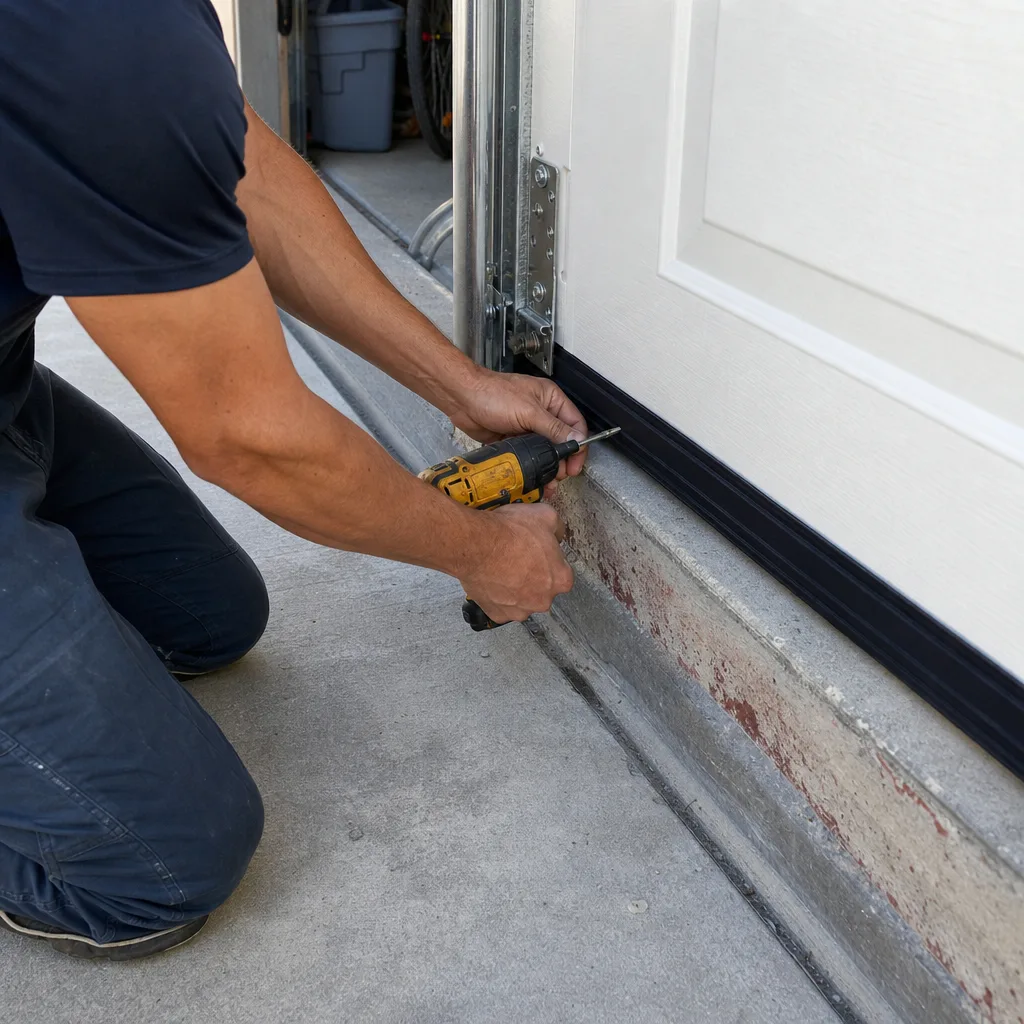
- Hiring based on review count. Fifty five-star reviews tell you the customers were happy. They don’t tell you whether the contractor wrote the price before starting, photographed the failed part, or pulled a required permit. In the garage door trade, those behaviors predict more about your outcome than any star rating.
- Accepting a verbal estimate and shaking on it. A verbal estimate is not a quote. It’s an opening bid that will drift upward once the truck pulls into your driveway and the work starts. If it isn’t written, it doesn’t exist.
- Paying in full before the job is done. A deposit for a custom-ordered door is normal. Full payment before the work is complete is not. In Huntington Beach, the contractors who demand full prepayment are almost always the ones with the most urgent same-day pitches.
- Choosing the cheapest bid because it’s the cheapest. The cheapest bid either uses generic parts, skips the documentation, or intends to make the money back on change orders. None of those outcomes serve you.
- Ignoring the salt-air corrosion factor. Huntington Beach’s coastal climate chews through cheap hardware. If your bid quotes bottom-shelf rollers and hinges, the savings evaporate in a season or two when you’re paying for replacement parts again.
- Signing a contract without a written part number. “New spring, installed” is not a part number. It’s a blank check. Without the specific manufacturer and part number, you cannot verify what was installed or what the warranty actually covers.
- Letting urgency drive the hire. A broken spring is urgent. The replacement decision doesn’t have to be. The contractor who tells you that you have one hour to commit to a $2,500 replacement before the “discount” expires is using a sales script, not a diagnosis. Walk away.
When to Call a Professional
Some garage door issues are real emergencies. A torsion spring snapped at night and the door won’t budge. A cable came off the drum while the door was halfway up, leaving a 400-pound panel hanging at an angle. An opener’s logic board failed and the door opens or closes on its own. These require a trained professional, not a YouTube tutorial, because the torsion spring assembly is under tension that can cause serious injury if mishandled. See our DIY vs Professional Garage Door: The Huntington Beach Homeowner’s Decision Guide for why the risks outweigh the savings. We’ve seen the aftereffects of DIY spring repairs in Huntington Beach, and they’re always more expensive than the original repair would have been. Servo Garage Doors Huntington Beach offers free estimates in Huntington Beach, and our technicians carry the parts on the truck for the most common failures. Call (657) 256-6126 and you’ll speak to a live person, not a recording.
Frequently Asked Questions
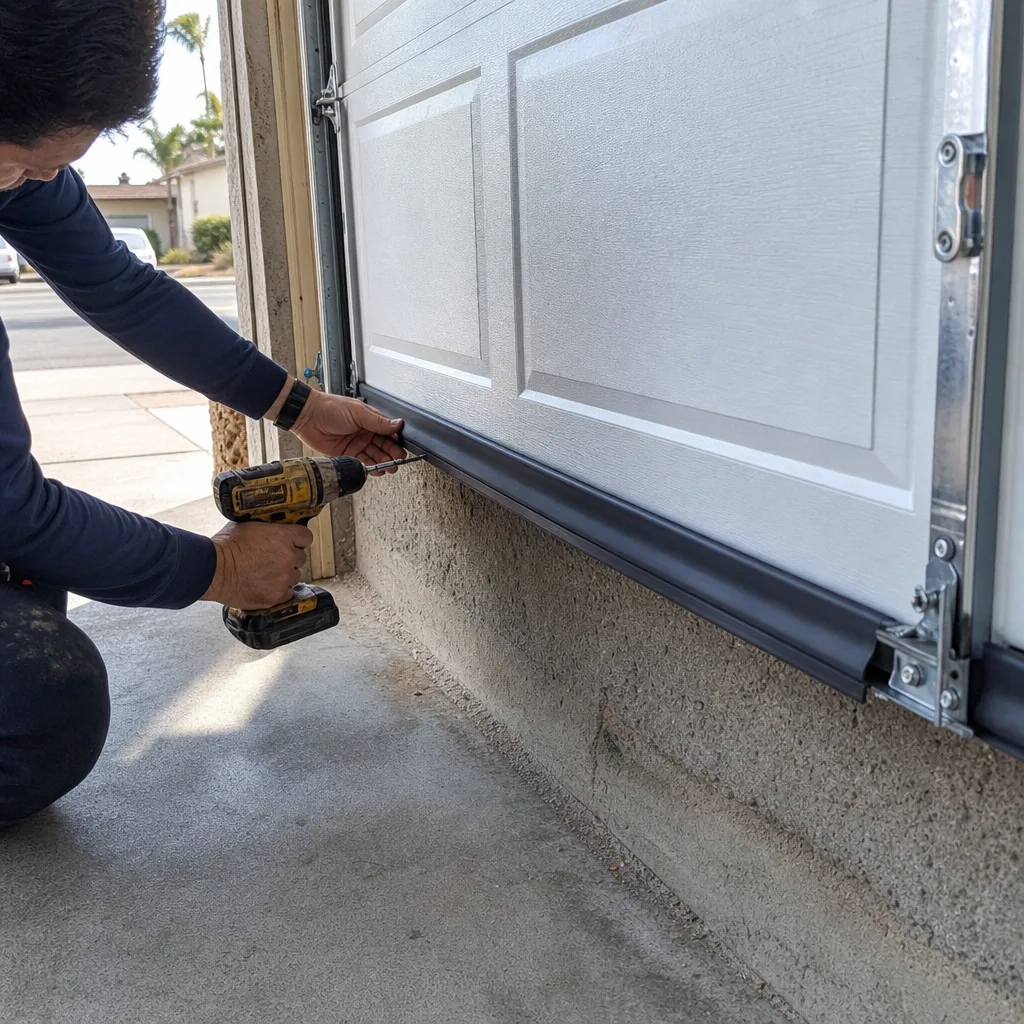
Most garage door repairs in Huntington Beach run between $180 and $340 for a standard torsion spring replacement, with roller replacements and cable repairs typically falling in the $120 to $220 range. These are labor ranges quoted on the phone before any work starts, not vague “it depends” answers. Call (657) 256-6126 for a written, itemized quote on your specific issue. The estimate is free and the price is set before any work begins.
Yes. Anyone performing garage door installation or repair in Huntington Beach for more than $500 in labor and materials must hold a C-61/D28 specialty license from the Contractors State License Board. The D28 classification covers garage doors specifically, unlike a general B license, which is for broader construction work. Verify the license number on the CSLB website before you schedule any estimate.
A standard single-door residential installation in Huntington Beach takes one day once the door arrives, though the custom-ordered panels may take two to three weeks to come in. We schedule installation work, and we handle the ordering and the scheduling directly with the manufacturer. This includes doors from Clopay, Amarr, Wayne Dalton, and Craftsman. A free measure and a written price precedes any installation order.
Yes. Servo Garage Doors answers calls with a live person around the clock, including holidays. If your garage door won’t close or a spring has snapped, we dispatch a named technician with an on-the-way text, not a callback window. Emergency calls in Huntington Beach are a regular part of our week. Call (657) 256-6126 and you’ll speak to a real person, not an answering service.
Most Huntington Beach garage door replacements do not require a permit. However, if the work modifies the structural framing or alters the fire-rated assembly between the garage and the living space, the city may require permitting. Your contract should state who is responsible for pulling permits if any are required. If the contractor won’t put that responsibility clause in writing, treat it as a red flag.
Bring it in for a Free Second Opinion. Servo offers a second-look review on any written estimate from another company, with no coupon or code required. We’ll compare the line items, the part numbers, and the warranty terms and tell you what’s fair and what isn’t. Call (657) 256-6126 to schedule the review.
The Bottom Line
Hiring a garage door contractor in Huntington Beach isn’t about finding someone who can do the work. It’s about finding someone who will write down what they’re doing and at what price before they touch anything, and who will hand you documentation when the work is done. Stars and reviews don’t capture that behavior. Paper does. Verify the license. Ask the four questions. Check the part numbers. Sign only a complete contract. For a full overview, read The Complete Guide to Garage Door in Huntington Beach. If you can find a contractor who does all of it without you having to ask, that’s the one. And in our experience, the odds of finding that contractor go up dramatically when documentation is the standard you’re screening for, not the slogan.
Contact Servo Garage Doors Huntington Beach
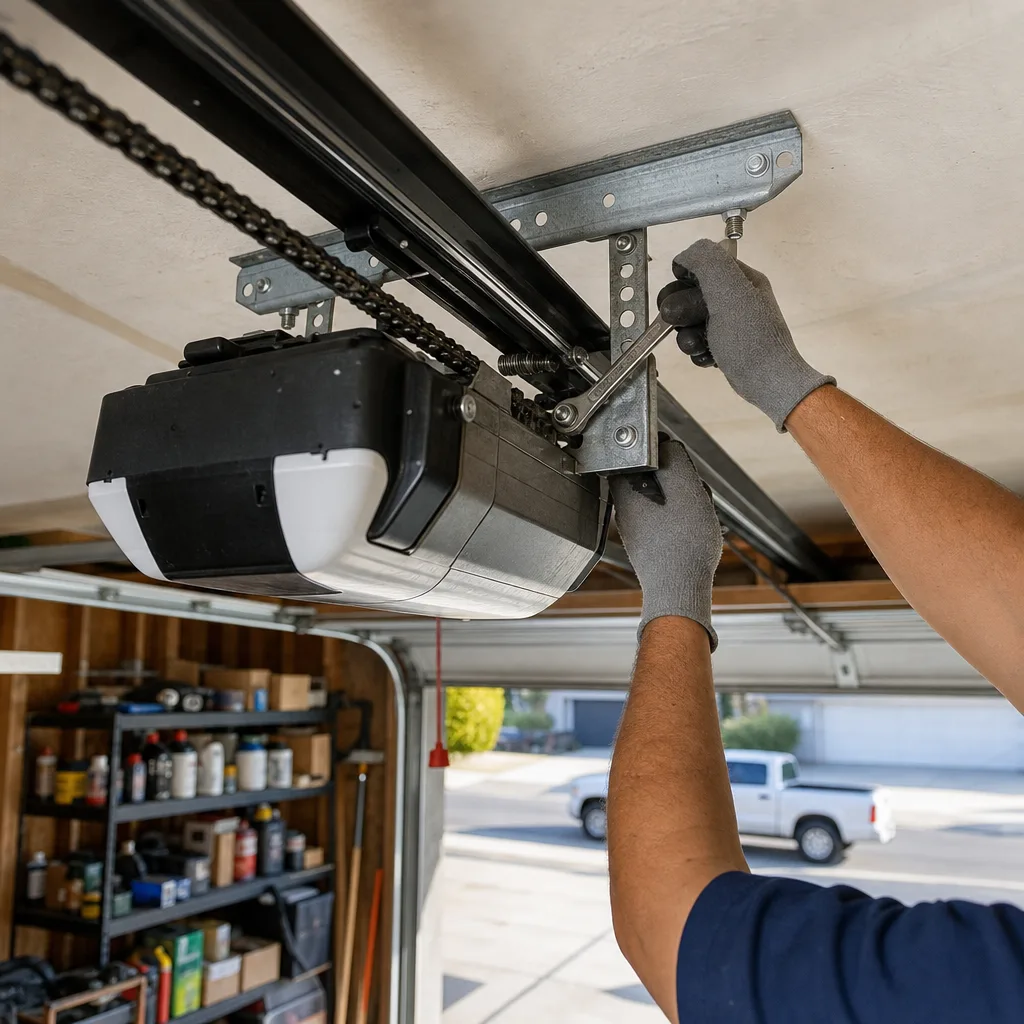
If you’re in Huntington Beach and need garage door repair, installation, or opener work, we’d rather show you how we work than tell you. Call (657) 256-6126 for a free estimate. You’ll speak to a live person, get a written price before any work starts, and receive a documented photo record when the job is done. That’s how we’ve made 18,000+ garage doors right since 2015, and it’s how we’ll make yours right too. Learn more about our Servo Garage Doors Huntington Beach home page, or read about our Garage Door Repair in Huntington Beach service. We also handle Garage Door Installation in Huntington Beach and Garage Door Opener Repair & Installation in Huntington Beach.
Written by Marcus Deller, Owner at Servo Garage Doors Huntington Beach, serving Huntington Beach since 2015.