
Last updated September 19, 2026
Full 25-point door and opener safety check with every visit - springs, cables, rollers, tracks, and your LiftMaster or Chamberlain opener included
You get a price before we start. It does not change when the truck arrives.
 Before
 After
After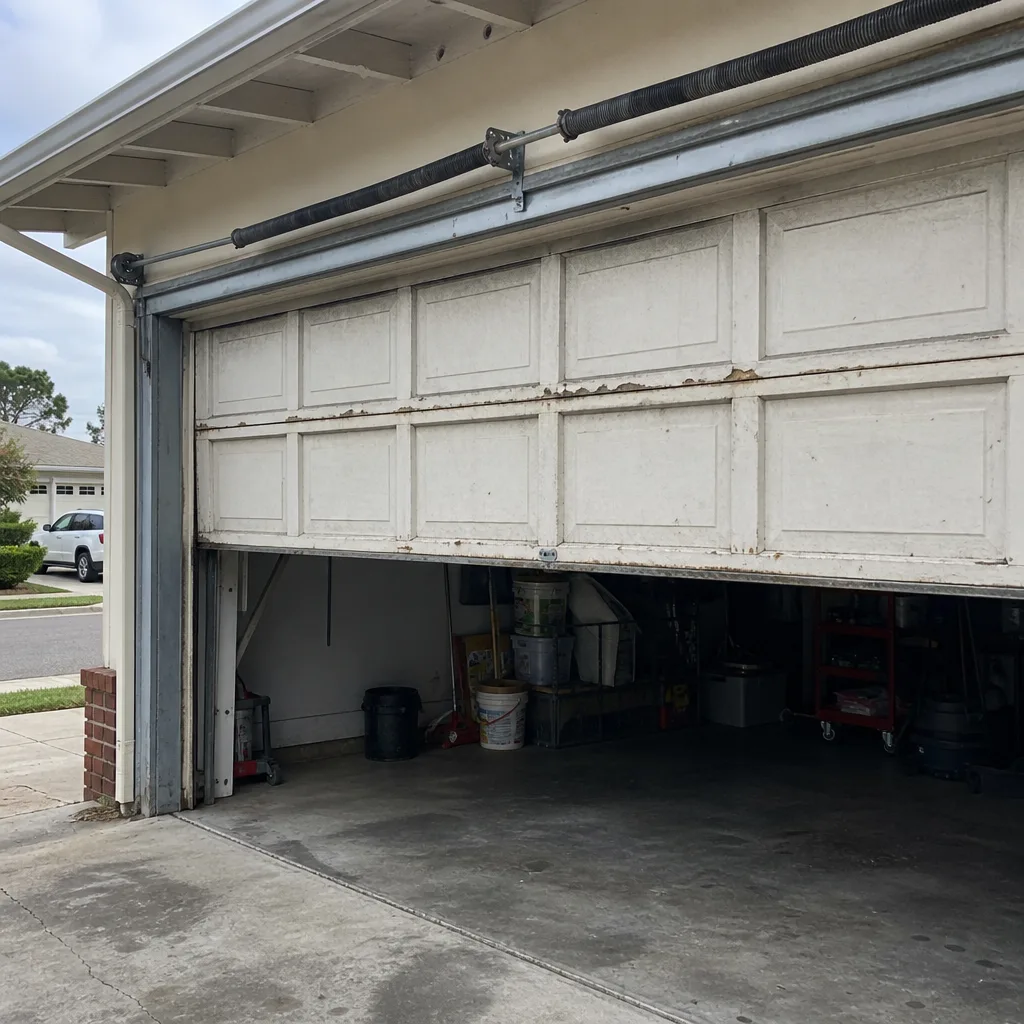 Before
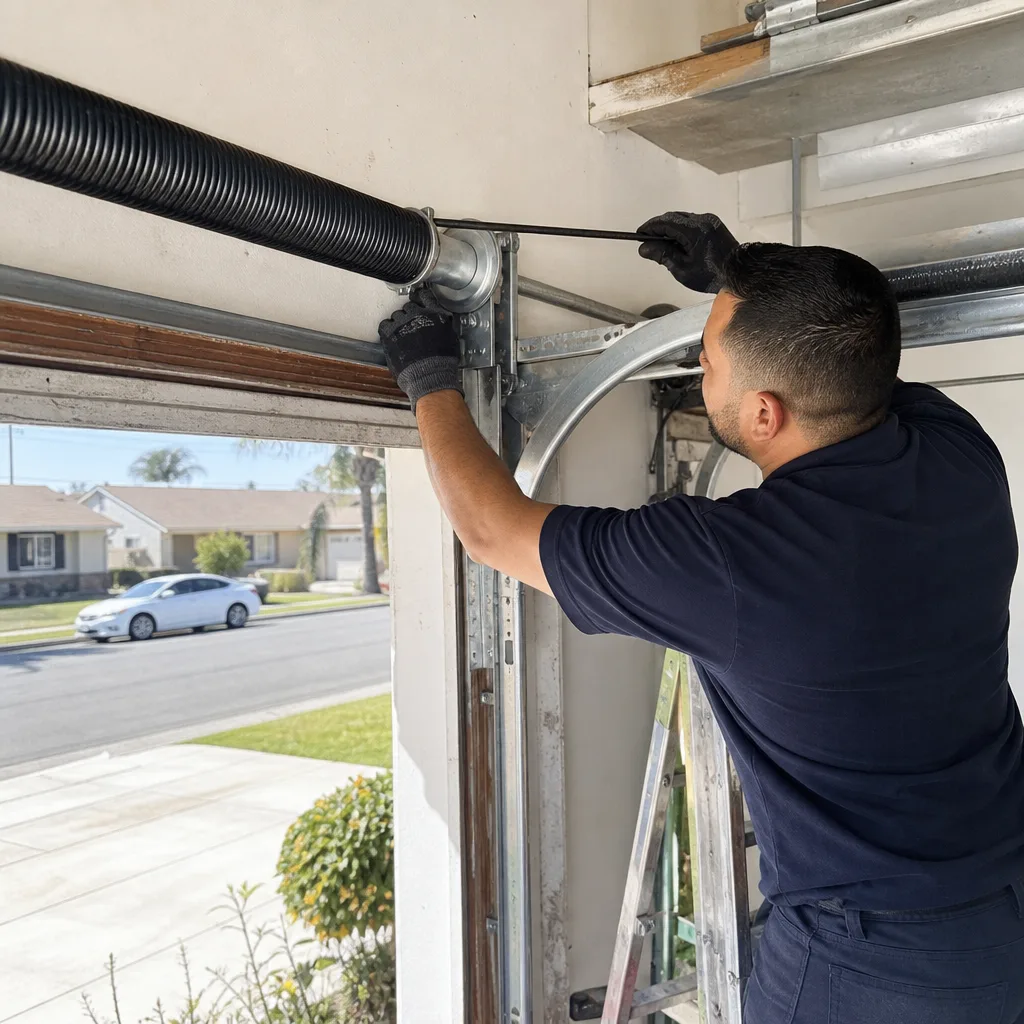 After
After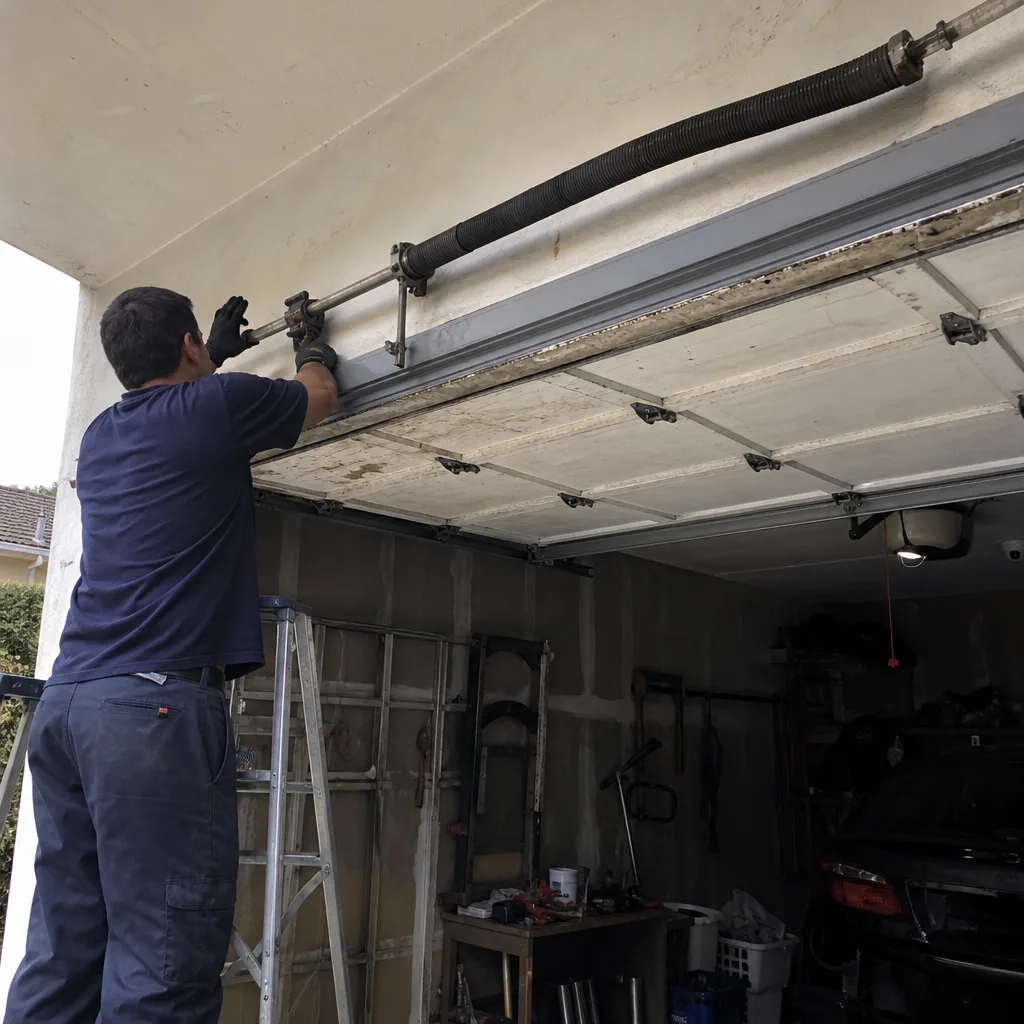 Before
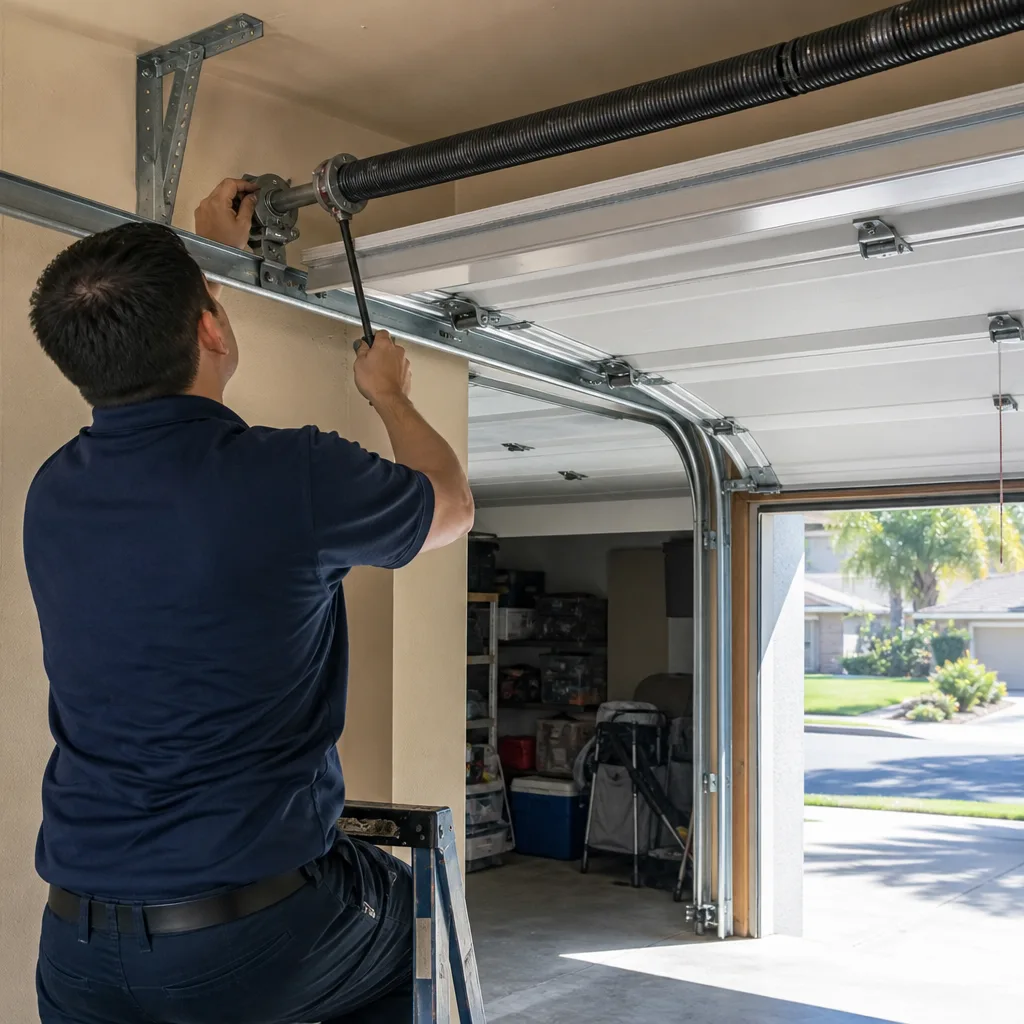 After
AfterGarage Door Warning Signs: A Huntington Beach Homeowner’s Reference Guide
Most garage door advice online treats every symptom as an emergency, and that’s simply not how the equipment works. A frayed cable is an emergency. A grinding sound that has been steady for eight months is not. This guide, part of The Complete Guide to Garage Door in Huntington Beach, sorts warning signs into two columns: stop using the door now, or schedule service this week. You’ll learn what each sound and sight actually indicates at the component level, why the coastal climate here produces failures inland homeowners rarely see, and how to document what you observe so any repair quote can be verified against the evidence.
Quick Answer
The warning signs that demand immediate attention in Huntington Beach are a visibly broken torsion spring, a frayed or separated cable, and a door that has jumped its track. Anything else – slow travel, grinding, uneven gaps at the floor, surface rust on hardware – is a schedule-within-the-week issue. The distinction matters because two of the three urgent signs carry genuine safety risk, while the rest can be triaged without panic.
Table of Contents
- Stop vs. Schedule: A Two-Column Triage Table
- The Sound Diagnostic: What Grinding, Popping, Slapping, and Squealing Indicate
- Coastal Corrosion: Warning Signs Specific to Huntington Beach
- How to Photograph a Warning Sign Correctly
- Three Warning Signs That Void Your Warranty If Ignored
- The Reversing Door: More Than a Sensor Problem
- Slow Travel and Uneven Gaps: What They Mean at the Component Level
- Common Mistakes to Avoid
- When to Call a Professional
- Frequently Asked Questions
BeforeAfterStop vs. Schedule: A Two-Column Triage Table
The most useful thing a Huntington Beach homeowner can do before calling any garage door company is classify the problem. Not all warning signs are created equal. Some mean the door is under dangerous tension and should not be operated. Others mean a component is wearing down and can wait a few days. Here is the triage table we use when homeowners call our office describing symptoms over the phone.
Stop Using the Door Immediately
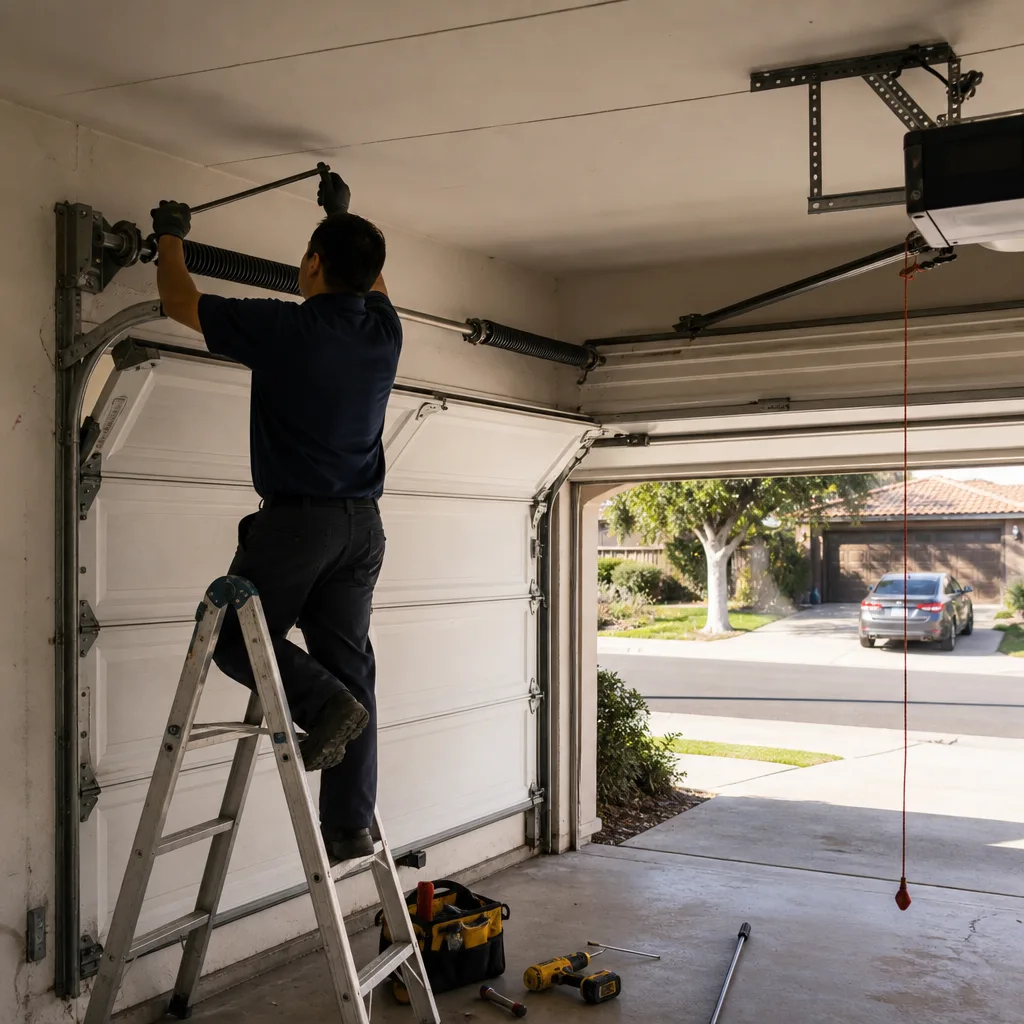
- Broken torsion spring: You will hear a loud bang, like a firecracker, and the door will either not lift or will lift only a few inches. The torsion spring is under hundreds of pounds of tension. When it breaks, the door’s full weight is unassisted, which means the opener motor is now lifting dead weight it was never designed for, and any manual attempt to lift the door puts you directly under a falling panel. The spring has broken; no amount of opener force will compensate.
- Frayed or separated cable: The cables run along both sides of the door and attach to the bottom brackets through the torsion system. If you see individual wire strands poking out, or a cable that has unwound from its drum, the door can drop unevenly and bind in the track. A separated cable on one side means the remaining cable is carrying uneven load, and it is now a matter of when, not if, the second one fails.
- Off-track panel or roller pulled from the track: If any roller has left its track, the panel it supports is now hanging. Operating the door will force other rollers out and the entire door can come off its mounting. This is the single most dangerous condition because the failure mode is sudden and total.
Schedule Service Within 7 Days
- Slow travel with no other symptoms: Usually a lubrication issue, a tired opener motor, or a spring that has lost tension but has not snapped. The door is not dangerous, but continued operation accelerates wear on the motor and the gear assembly.
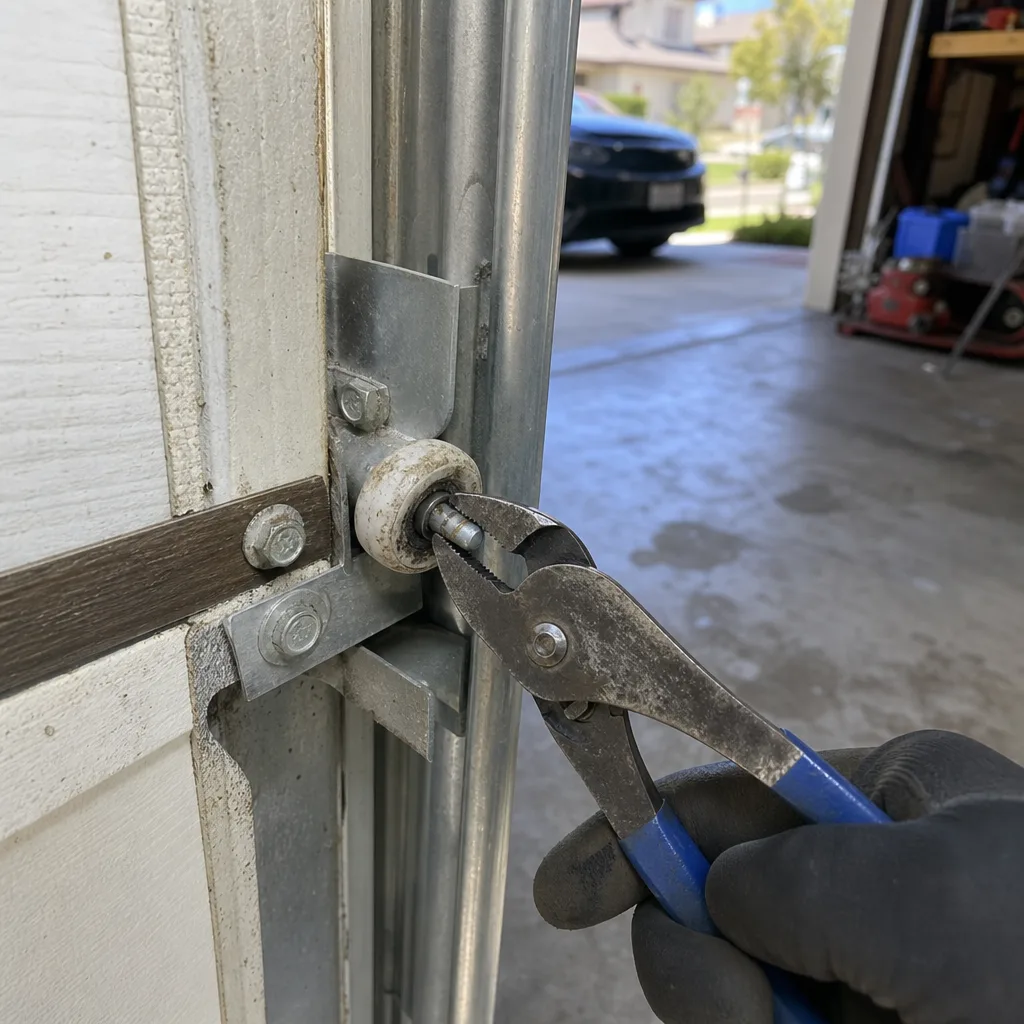
- Grinding noise that has been present for weeks or months: Almost always a roller bearing that has lost its sealed lubrication, or a dry track. It will not strand you tonight, but the rollers will eventually seize and then the door binds, which can pull the track out of alignment.
- Uneven gap at the floor on one side: This means the door has settled, the spring tension is uneven, or one cable drum has slipped. The door still operates, but the imbalance is putting extra load on one hinge line and one side of the torsion assembly. It is a repair that gets more expensive the longer it waits.
The reason we separate these columns is simple: operators who treat every symptom as an emergency create urgency where the evidence does not support it. In Huntington Beach, our Garage Door Repair in Huntington Beach calls skew toward sensor and spring issues, but a meaningful percentage are homeowners who were told elsewhere that a worn roller was an immediate hazard. It was not. A written diagnostic matters because it tells you what actually failed, not what someone needed to sell that day.
The Sound Diagnostic: What Grinding, Popping, Slapping, and Squealing Indicate
Sound is the warning sign most homeowners notice first, and the one most often misdiagnosed by vague online advice. A garage door makes four mechanically distinct noises before a component fails. Each one points to a different part.
Grinding
Grinding is a metal-on-metal sound with a rough, continuous quality. It comes from the rollers, specifically the sealed ball bearings inside the roller wheel wearing down. Once the bearing loses its internal lubrication, the wheel no longer spins freely on the roller stem; it drags. The fix is roller replacement, which is a straightforward repair. If you ignore grinding long enough, the roller wheel breaks apart entirely and the door can jam mid-travel. We see this most often in Huntington Beach on doors that face the ocean breeze, because salt-laden air accelerates bearing corrosion. The roller fails from the inside out.
Popping
A popping or banging sound during door travel is usually the sections binding at the hinges. The popping happens when a hinge pin is dry or a hinge leaf has begun to bend, and the door panels fight each other as they round the curved section of track. It is not an emergency. It is a hinge wear signal, and if caught early, it is resolved with hinge replacement and proper lubrication. Popping at the moment the door hits the floor is different: that is usually the bottom bracket or the stop bolts needing adjustment, a minor alignment issue.
Slapping
Slapping sounds like a loose object hitting the door or the header. It is almost always the chain or belt on the opener drive system. A chain that is too loose will slap against the rail as the trolley moves; a belt with lost tension will do the same. The fix is drive tension adjustment, which is part of standard Garage Door Opener Repair & Installation in Huntington Beach work. Left unaddressed, a loose chain will eventually skip teeth on the drive sprocket and the door may fail to move at all.
Squealing
Squealing is high-pitched and commonly mistaken for a spring problem. In our experience it is much more often a dry track, a dry torsion spring, or worn nylon rollers. The spring is the first place to check because a dry spring coils and uncoils with friction, and that friction produces a squeal that changes pitch as the spring winds and unwinds. Squealing is not a mechanical failure; it is a maintenance indicator. Proper spring lubrication quiets it immediately, but using the wrong product – garage door springs require a penetrating solvent first, then a lithium or silicone grease, not WD-40 – will make it worse by creating a sticky film that holds grit.
Coastal Corrosion: Warning Signs Specific to Huntington Beach
Huntington Beach’s position on the coast creates a garage door environment that is measurably different from inland Orange County, as covered in our Seasonal Garage Door Care for Huntington Beach: Year-Round Homeowner’s Guide. Salt spray, humidity, and the marine layer act on steel components year-round. A door in Anaheim may show clean hardware at 15 years; the same door in Huntington Beach can show pitted springs and rusted bottom brackets at 8. The warning signs are specific and worth knowing.
Surface Rust on Torsion Springs
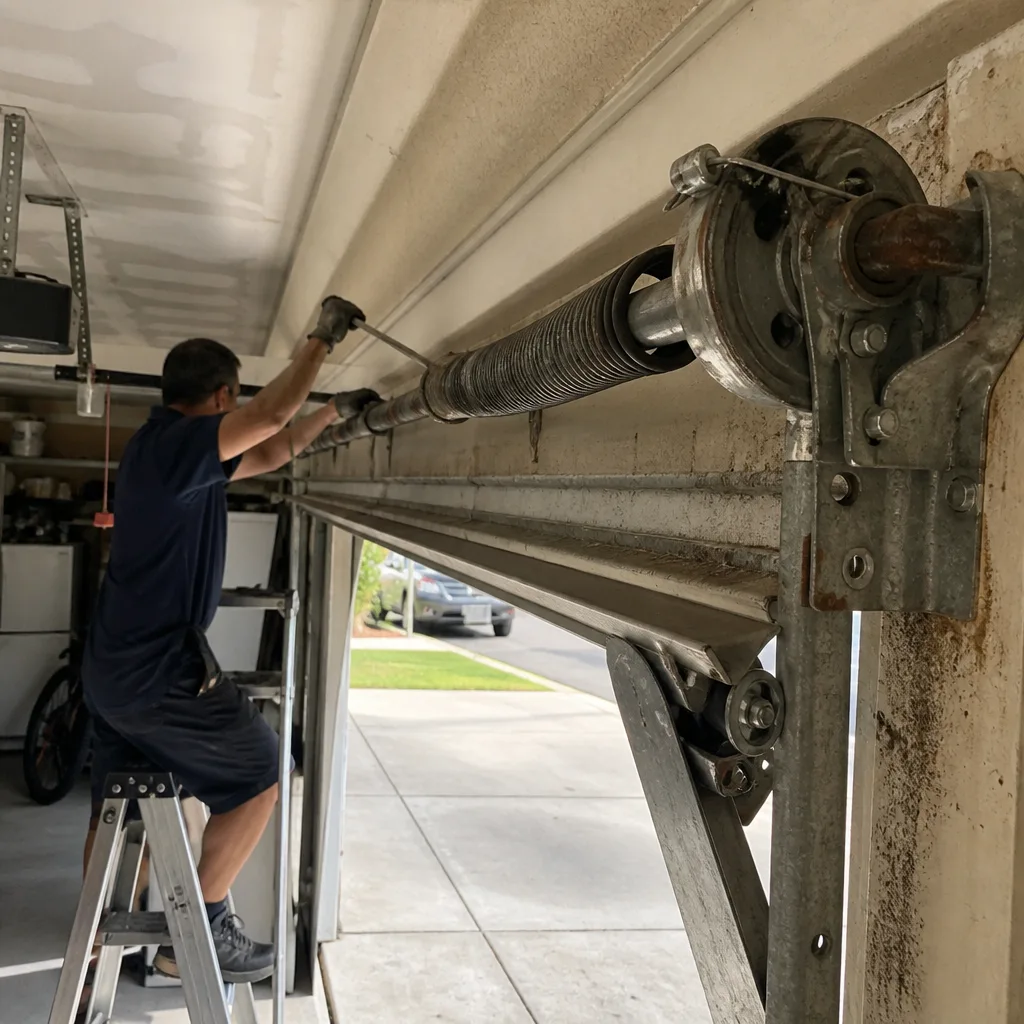
Before a torsion spring fractures, it typically passes through a stage of visible surface corrosion. You will see rust blooms, usually orange-brown, concentrated at the spring’s midpoint and around the stationary cones at each end. These are stress concentration points. Surface rust alone does not mean the spring will break tomorrow; what it means is the spring’s protective coating has failed and the wire is now oxidizing. Once pitting begins – you will see it as small depressions in the metal when you look closely – the spring’s fatigue life is reduced. A pitted spring should be replaced on your schedule, not after it snaps at 6:40 a.m. on a Monday.
White Mineral Buildup on Track
This one is distinctive to coastal environments. Aluminum garage door tracks corrode differently than steel springs. Instead of rusting, they form a white, chalky oxidation layer, technically aluminum oxide, where salt spray has settled. The buildup itself is not structural, but it creates friction against the rollers, which accelerates roller wear and can cause the door to feel like it is dragging. If the white buildup is thick enough to scrape off with a fingernail, the track needs cleaning and the rollers need inspection. We also look for galvanic corrosion at the point where steel brackets attach to aluminum track; salt water bridging the two metals creates a localized corrosion cell. That is a Huntington Beach-specific failure pattern we see regularly.
Cable Corrosion at the Drum
Garage door cables are galvanized steel, but the galvanizing wears thin at the point where the cable wraps around the cable drum. On coastal properties, this is where you will find rust. A corroded cable loses individual wire strands gradually. The warning sign is a fuzzy, frayed appearance on the cable where it contacts the drum, or rust staining on the drum itself. Once a cable shows visible strand breakage, it is in the stop-using-the-door category.
How to Photograph a Warning Sign Correctly
Our founding rule at Servo is that the customer sees the failed part before anyone quotes a replacement. That rule exists because garage door repair has historically been a trade where diagnosis happens out of sight and the homeowner is asked to trust the word of the person holding the wrench. You should photograph what you observe before calling anyone, and the value of those photos depends entirely on how they are framed. Here is the process we recommend.
Step 1: Photograph the Wide View First
Stand inside the garage, facing the door, and take a photo of the entire door assembly. Include the top sections, the track on both sides, the spring assembly across the header, and the floor gap. This wide shot establishes context. It lets a technician see alignment issues, level differences, and which side of the door is affected. It also records the make and model if the manufacturer label is visible.
Step 2: Photograph the Specific Part at an Angle That Shows Failure
For a rusted spring, photograph at a 45-degree angle to the spring coil, not dead-on. The angle reveals pitting and surface texture that a straight-on shot flattens out. For a frayed cable, get close enough that individual wire strands are visible. Use the camera’s zoom rather than moving closer; this keeps the part in focus without casting a shadow across the defect. For a worn roller, photograph the roller wheel and stem where it meets the track, with the track edge visible in frame as a reference line.
Step 3: Label the Part in Frame
If you are photographing a spring, include the center bracket or the winding cone in the frame. If it is a hinge, include the section seam. The goal is that anyone looking at the photo can identify which part they are seeing without asking. A photo of an unidentifiable metal object tells a technician nothing.
Good documentation is why Clause 4 of The Haven Standard exists: the technician photographs the failed component before quoting a replacement, and the customer receives the photo record when the job closes. Your own pre-call photos let you compare what the technician shows you against what you observed. If the technician points to a spring that looks intact in your photo from yesterday, you have grounds for a conversation. That is exactly the kind of accountability the documentation standard is built for.
Three Warning Signs That Void Your Warranty If Ignored
Most garage door and opener warranties contain a reasonable maintenance clause. The language varies by manufacturer, but the intent is consistent: the homeowner is expected to address known issues in a timely manner, and failure to do so can void coverage on the affected component and on related parts damaged as a consequence. These are the three warning signs that show up in warranty disputes most often.
- Ignored lubrication on rollers and hinges: When a roller bearing runs dry, the roller wheel scores the track. The manufacturer’s warranty typically covers the roller, not the track damage caused by running the door with seized rollers. The defense is simple: the homeowner heard the grinding and kept operating the door. The repair becomes a wear-and-tear exclusion, and the track replacement is now on the homeowner.
- Deferred spring replacement after visible corrosion: A spring that shows rust and pitting is a foreseeable failure. If the spring breaks and takes out the cable drum or damages the panel edge, the warranty claim will typically cover only a prorated portion of the spring, not the collateral damage. The manufacturer’s position is that the homeowner observed the condition and chose not to address it.
- Operating the door after a cable fray is visible: A frayed cable is not subtle. Once individual wire strands are visible, continued operation puts abnormal load on the remaining cable strands and on the cable drum. When the cable finally separates and the door drops, the damage is usually to the panel, the track, and sometimes the opener carriage. The warranty exclusion reads: damage resulting from continued operation with a known defect. This is the most common warranty void we see in Huntington Beach because coastal cable corrosion accelerates the timeline between first visible fray and full separation.
The practical takeaway: if a warning sign is visible, document it and address it. The photo record you took becomes your evidence that you acted when the problem became known. That timeline matters in warranty disputes.
The Reversing Door: More Than a Sensor Problem
A garage door that reverses before hitting the floor is the most broadly misdiagnosed warning sign in the category. Online forums and generic advice columns default to “check the safety sensors,” and when that does not resolve the issue, homeowners have already bought a sensor replacement they did not need. The reversing symptom has at least four distinct mechanical causes, and only one involves the sensors.
Force-Setting Fault
Every opener has a force-sensitivity adjustment, which sets how much resistance the motor will push against before it reverses. On a LiftMaster or Craftsman unit, the setting is either a knob on the motor housing or a digital value in the menu. Over time, as the door’s weight changes – a new paint job, a rusted bottom panel, a spring losing tension – the motor encounters more resistance than its set threshold and reverses as a safety response. The problem is not the sensor. The problem is the force setting is too low for the door’s current weight, or the spring has weakened and the opener is now underlifting. Adjusting force without addressing the underlying spring condition masks the problem and strains the opener gear.
Worn Cable Drum
The cable drum sits at the end of the torsion tube and winds the cable as the door moves. When a drum has worn, the cable wraps unevenly, which changes the effective lift point on one side of the door. The door begins to travel slight askew, the track senses increased friction on one side, and the opener reverses. This is not a sensor issue. It is a drum replacement, and on a Raynor or Wayne Dalton door, the drum is often paired to the spring size. Replacing one without checking the other’s spec produces an unbalanced door.
Misaligned Track
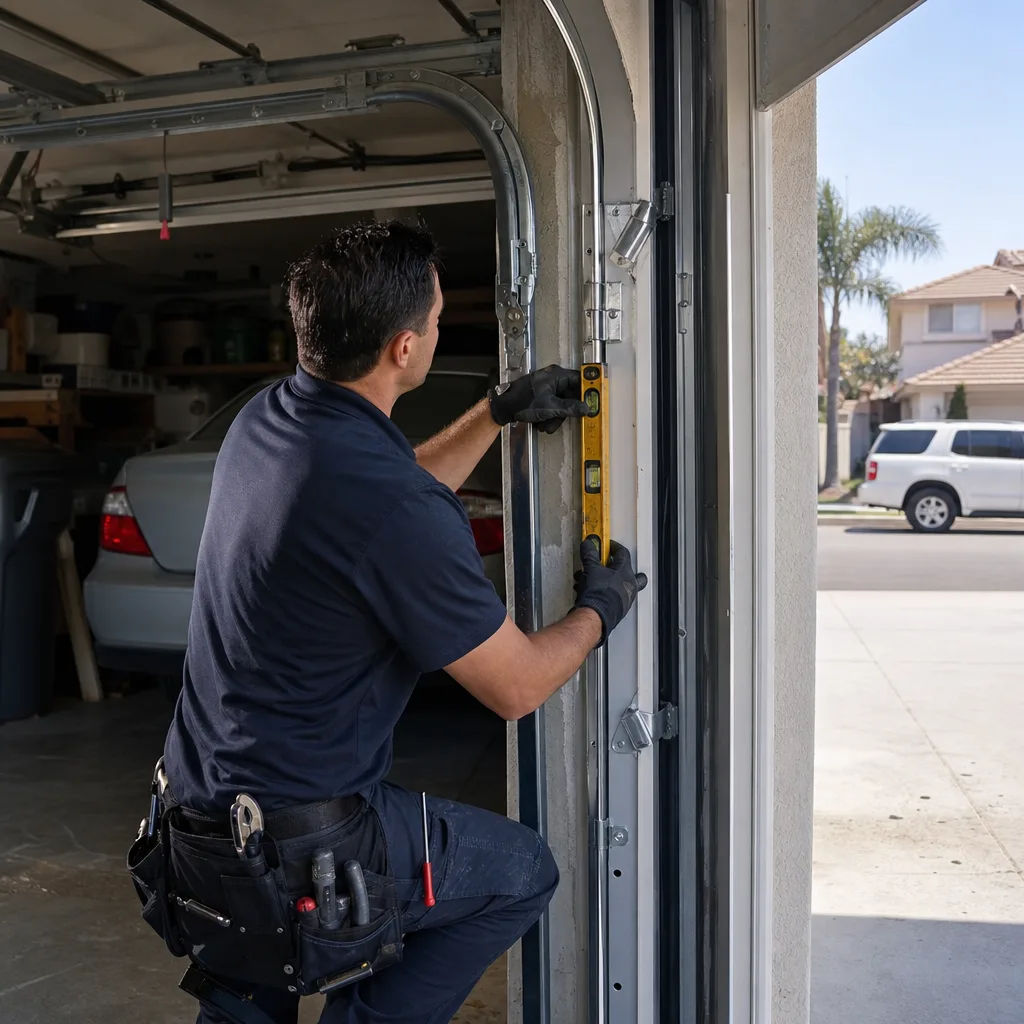
A track that has been bumped – by a car bumper, a bike handlebar, or just settling over time – will pinch the rollers at one point in travel. The motor encounters the pinch, reads it as an obstruction, and reverses. The fix is track realignment, which takes a trained technician about 20 minutes. The misdiagnosis tail is long: homeowners replace sensors, then the logic board, then the opener itself, before anyone checks whether the track is straight.
Actual Sensor Failure
The sensors do fail, and when they do, the symptom is usually not a door that reverses near the floor. A failed sensor typically prevents the door from closing at all, or causes it to reverse immediately after starting. The sensors are the easy thing to check – blocked lens, misaligned eye, broken wire – but they are the wrong first assumption for a door that travels most of the way down and then reverses. That travel pattern points to resistance, not to the safety beam.
Slow Travel and Uneven Gaps: What They Mean at the Component Level
Two warning signs that get dismissed as minor annoyances are a door that travels noticeably slower than it used to, and a gap at the floor that is wider on one side than the other. Both are diagnostics, and both are worth reading correctly.
Slow Travel
A door that moves slower than normal is almost always one of three things. First, a tired opener motor: the motor’s torque output drops as the unit ages, and a 15-year-old opener simply cannot pull what it once did. Second, a spring that has lost tension: the spring is still intact, but it has settled, which means the opener is carrying more of the door’s weight than it was designed for. Third, roller and track friction: old rollers with seized bearings create drag that compounds every cycle. The diagnostic path is to measure the spring’s current tension, then check roller condition, then evaluate the opener. The mistake is jumping to the opener replacement first, which is the most expensive step and may not address the underlying spring or roller condition. Servo services all major brands including LiftMaster, Chamberlain, Genie, Clopay, Amarr, Wayne Dalton, Craftsman, and Raynor, and a proper diagnostic names which component is actually at fault.
Uneven Floor Gap
When the door meets the floor on one side but leaves a visible gap on the other, the cause is rarely a warped panel. It is usually one of these:
- Uneven spring tension: A two-spring system with one spring settled more than the other will lift one side slightly higher at rest, which produces the gap.
- Slipped cable drum: A drum that has moved on the torsion tube changes the effective cable length on one side, so the door sits cocked.
- Bottom seal compression: The rubber weatherstrip along the bottom edge compresses unevenly over time, especially on one side in Huntington Beach sun exposure. This one is cosmetic, but it can look like a mechanical alignment problem.
- Track settling: The vertical track on one side may have shifted slightly, usually from a mounting bracket working loose. The door travels to the floor fine but lands unevenly.
The important distinction: an uneven gap caused by spring or drum issues is a mechanical imbalance that will accelerate wear on every other component. An uneven gap caused by a compressed seal or a slightly settled track is a minor adjustment. The way to tell the difference is to measure the door’s level at multiple points along its travel, which is part of a standard diagnostic visit.
Common Mistakes to Avoid
- Replacing sensors before diagnosing a reversing door. As covered above, most reversing-door issues are force settings, drum wear, or track misalignment. Replacing sensors first is the single most common unnecessary repair in the category, and it works just often enough that the habit persists.
- Lubricating a squealing spring with WD-40. WD-40 is a solvent, not a lubricant. It strips the remaining protective grease and leaves the spring dry, which makes the squeal louder and invites rust. Garage door springs need a dedicated lithium or silicone grease applied after the spring is clean.
- Using the door after hearing a torsion spring snap. Once a spring has broken, the door’s full weight is on the opener motor and the remaining cable. Every cycle you run in this state flirts with a cable separation, which is the catastrophic failure mode. Stop, disconnect the opener, and call.
- Ignoring a slow door because it still opens. Slow travel is a compounding warning sign. The longer it runs, the more heat builds in the opener motor, the more the gear assembly wears, and the more the rollers degrade. A $200 roller replacement becomes a $600 opener repair when the motor burns out.
- Assuming a warranty covers everything. The reasonable maintenance clause is real, and it is enforced. Document your warning sign, act on it, and keep the record. That is exactly the position you want to be in if a claim is disputed.
- Calling an emergency service for a non-emergency symptom. Urgency pricing is real. If your door is grinding but still operating, you have time to get a proper written estimate. If it is off-track or a cable is frayed, that is different. Use the triage table at the top of this guide.
- Replacing an opener without checking the spring first. The opener and the spring are a system. If the spring has lost tension, a new opener is being asked to compensate for a failing spring, which shortens the new opener’s life and leaves the root cause unaddressed.
When to Call a Professional
You should call a technician the moment you identify a stop-using-the-door sign: a broken torsion spring, a frayed cable, or a panel off its track. These involve high-tension components, and the torsion spring specifically carries enough stored energy to cause serious injury if mishandled. We do not recommend any DIY work on springs, cables, or bottom brackets. Those parts are under constant load even when the door is down.
For schedule-within-7-days signs, a professional diagnostic is worth the visit because it tells you which component is actually failing before money is spent. Servo Garage Doors Huntington Beach offers free estimates in Huntington Beach. The diagnostic includes a written flat price and written scope before any work starts, per Clause 1 of The Haven Standard, and a documented photo record of everything we find. Call (657) 256-6126. The price is on paper before a single part is touched.
Frequently Asked Questions
Spring replacement in Huntington Beach typically runs between $220 and $420 for a standard torsion spring, including the part and labor, with the exact price depending on spring wire diameter, door weight, and whether it is a single or double spring system. Written quotes should state the spring spec, not just a price. Call (657) 256-6126 for an exact quote, and remember that every Servo price is flat and written before the work begins.
Yes, cable replacement is a same-day repair when scheduled, and Servo technicians carry the common cable sizes and drums on the truck. A frayed cable is a stop-using-the-door condition, so when you call (657) 256-6126, our dispatchers will treat it with the urgency it deserves and walk a real technician through the diagnosis over the phone.
No. The written price and written scope are delivered before any work starts, and that price does not change if the technician discovers additional problems mid-repair. If a new issue is found, you are told before additional work is quoted. Clause 1 of The Haven Standard exists precisely because hidden pricing has been a persistent problem in garage door repair. With Servo Garage Doors Huntington Beach home service, what is on paper is what you pay.
A door that reverses at mid-travel, as opposed to near the floor, usually indicates a force-setting fault or an obstruction in the track, not a sensor problem. The opener is encountering resistance it was not programmed to push through and reverses as a safety response. The fix requires checking door balance, spring tension, and track alignment, which is a standard diagnostic visit rather than a parts replacement.
We recommend an annual inspection and lubrication for any door within three miles of the beach, because salt air shortens the life of springs, rollers, and cables. For doors further inland in Huntington Beach, every 18 to 24 months is typically sufficient. The inspection should include spring tension measurement, cable inspection, roller bearing check, and a visual on the opener’s drive system.
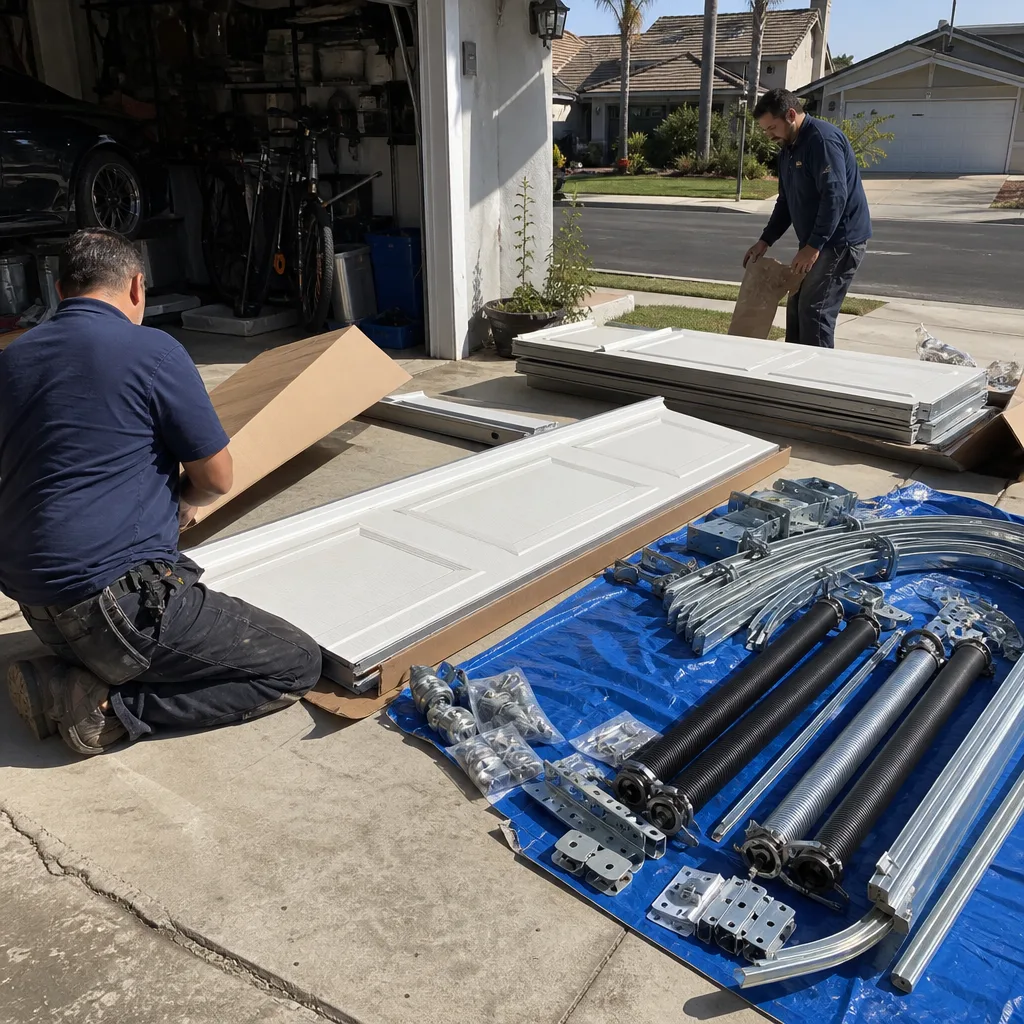
If the opener is more than 12 years old and the failing part is the motor or logic board, replacement is usually the better financial decision. If the failure is a gear assembly, a capacitor, or a limit switch, repair typically costs between $85 and $200 and extends the opener’s life by several years. The way to decide is a definitive diagnosis, not a guess. Servo’s Garage Door Installation in Huntington Beach team can walk you through the math on any opener we inspect, and every quote is written before work starts.
The Bottom Line
Garage door warning signs fall into two categories, and knowing which is which saves you money, protects your warranty, and keeps your family safe. Broken springs, frayed cables, and off-track doors are stop-using-it conditions. Grinding, squealing, slow travel, and uneven gaps are schedule-it conditions. Most reversing doors are not sensor failures; most squeals are not spring failures; most warranty voids come from ignored, documented, foreseeable failures. And the best defense is a paper trail: photograph what you observe, insist on a written price and scope before work begins, and expect a documented record when the job is done. That is the standard we have worked to since 2015, and it is the standard every Huntington Beach homeowner should hold any garage door company to. For more guides & resources, visit our blog. Call (657) 256-6126 with a photo and a description, and you’ll get a straight answer about which column your door falls into.
Written by Marcus Deller, Owner at Servo Garage Doors Huntington Beach, serving Huntington Beach since 2015.